U3A Benalla
  • Home
  • Benalla
    • Benalla
    • Benalla District
    • Who, What and Where? - Benalla Rural City
  • About
    • Our U3A
    • President's Page
    • Executive Committee
    • Convenors >
      • Convenors
    • Policies
    • Newsletter
    • Website
  • Groups
    • 2026 Groups
    • Past Groups
    • Program Ideas
  • A-Coi
    • 'A Taste of Art'
    • American History
    • Art Appreciation
    • 'As Time Goes By'
    • Australian Shares and Stock Market
    • Be Connected - Tech Advice
    • Birdwatching
    • Brain Games - Neurobics
    • Car Torque
    • Cards '500'
    • Chat n' Chew
    • Coin Collectors
  • Col-F
    • Collectors
    • Community Singing
    • Come and Learn Croquet
    • Creative Writing
    • Critical Thinking
    • Demystifying Psychology - Discussion Group
    • Digital Up Skilling for Lifelong Learners
    • Easy Bushwalking
    • Exercises for Fun
    • Exploring the Universe
    • Family Research - Getting Started
    • Film Discussion
  • G-Pi
    • Garden Appreciation
    • Garden Team
    • German >
      • German Home
      • Lessons
    • Learning and playing traditional Celtic tunes
    • Let's Talk Books
    • Mahjong
    • Meet and Mingle
    • Music Appreciation
    • Page Turners
    • Patchwork and Craft
    • Pickleball
  • Pl-W
    • Play Reading
    • Poetry Appreciation
    • Politics & Current Affairs
    • Recorder
    • Singing for Fun
    • Social Golf
    • Sustainability/Stock & Land
    • Tech Talks
    • Train Buffs
    • Ukes4Fun
    • Using My Android Mobile Phone
    • Wine Appreciation
  • Join
    • Join Us
    • Membership Application/Renewal Form
    • Program Guide 2026
    • Timetable with Dates 2026
    • Venues and Maps
  • News
    • December Newsletter
    • News Blog
    • 'What's On' Calendar
    • Monthly Calendar
    • U3A Benalla Online - Emails, Website and Facebook
  • FB
  • Gallery
  • Links
    • Links and References
    • U3A Network Victoria
    • Seniors Online Victoria
    • U3A Albury Wodonga
    • U3A Beechworth (Indigo U3A)
    • U3A Bright
    • U3A Goulburn Valley
    • U3A Murrundindee East
    • U3A Wangaratta
  • Contact

October - Janáček, Dvořák, Schubert, Schumann, Schoenfeld Mozart and more

24/10/2025

 
“A  beautiful little Sinfonietta with fanfares” was how Leoš Janáček in a letter to female companion described a composition inspired by a military band they had listened to in a park in Písek, in southern Bohemia. Yet there was nothing “little” about it. Apart from it being the longest purely orchestral work Janáček composed (about 25 minutes’ worth), his Sinfonietta is scored for just about the largest brass section you’ll ever see in any orchestral work including nine trumpets in C, two bass trumpets, and two tenor tubas all underpinned by a pounding two-measure phrase in the timpani. 

The music of fellow countryman Antonin Dvořák in contrast is often filled with a quiet, wistful nostalgia, and an embrace of nature. We hear all of this in the Piano Quintet No. 2 in A Major, a work of profound depth and monumental scale which Dvořák composed in 1887 following his unsuccessful and discarded earlier piano quintet. Contrasts notwithstanding, the compositions of Dvořák and Janáček were deeply inspired by the folk songs and speech patterns of their Bohemian homeland known today as Czechoslovakia.  Such was the first of our two October programmes.

“Tragic”  was Schubert’s name for his 4th symphony, but we don’t know why. We do know that only two of his symphonies were written in minor keys (the other was the “Unfinished Symphony”). The nickname may have more to do with youthful drama then actual tragedy - Schubert was only 19 years old at the time of its composition, by which time this young genius had already written four symphonies and over a hundred musical works in all. Nothing tragic about Robert Schumann’s Three Romances Opus 94. Written on December 7, 11, and 12th 1849, the pieces - according to Schumann himself - were given to his wife Clara, whom he once described as his own "right hand", as a Christmas present. How romantic is that?

Bookending these two works in the second October session was Paul Schoenfeld’s Café Music and Mozart’s Quartet for Oboe and Strings.   In 1985 Schoenfeld was asked to fill in for the pianist at a restaurant which employs a house trio that plays entertaining dinner music in a wide variety of styles. “My intention, Schoenfeld said, “was to write a kind of high-class dinner music — music which could be played at a restaurant but might also (just barely) find its way into a concert hall”. Centuries earlier Mozart was invited to Munich to visit Elector Karl Theodor, who had commissioned the opera Idomeneo for a carnival celebration. While in Munich, Mozart renewed an acquaintance with Friedrich Ramm, a virtuoso oboist in the Munich orchestra and the most celebrated oboist of the day. It was for Ramm that Mozart composed the quartet. The year was 1781, the pivotal year of Mozart’s life. This was the year when he cut his ties with his family and hometown of Salzburg and struck out on his own as a freelance musician in Vienna. Reflecting his growing adulthood, the quartet was his first really mature piece of chamber music.

All this and more, including recordings, can be viewed by clicking on the links below.

Bill Squire.

Session Notes 10th October
Wagner - Flying Dutchman Overture
Dvorak - Piano Quintet No.2
Janacek - Sinfonietta
Sibelius - Finlandia
 
Session Notes 24th October
Schoenfeld -Cafe Music
Schubert - Symphony No.4
Schumann - Three Romances Opus 94
Mozart - Oboe Quartet
​

June - a focus on composer Erik Korngold

27/6/2025

 
When Erik Korngold was serving in the first world war as music director for his regiment, the General once remarked: “Isn't it a little fast, Korngold? The men can't march to that”. To which Korngold replied: “Ah yes, well, you see Sir, this was composed for the retreat”. Being Austrian by birth , but of Jewish descent, Korngold, a few years later, was to organise his own “retreat”, escaping to the USA when the Nazi regime came to power. Although composing scores for opera was his forte, Korngold was persuaded by Warner Brothers to write incidental music for films. He regarded his films as ‘operas without singing’, and it is said of him: “he was the musical prodigy who brought the sound of Wagner and Puccini to Hollywood”. Sensing, however, that when a film left public view so did his music, Korngold returned to more serious composition. His violin concerto nearly didn’t make it past its premiere. Panned by critics as “more corn than gold” it rocketed to fame when no less a violinist than Jascha Heifitz took it on board, and the rest is history, as they say. Interestingly the opening melody is the flight/love theme from the film “Another Dawn” – which Korngold had envisaged as a concerto theme years before the film. This concerto was the foundation on which the second of our sessions for June was based: a Cuban Overture by George Gershwin, a Spanish dance by Maurice Ravel, and the Symphonic Suite from Leonard Bernstein’s West Side Story making up the programme.

The month’s earlier session was somewhat more traditional, although Brahms’ 3rd Symphony was not regarded by the composer as such, casting it as ‘contemporary’. Seen by some as ‘modernist’ and ‘romantic’, the symphony does break away from common convention ever so slightly - its successive movements, for example, each end quietly. Dvorak’s Carnival Overture, a Chopin Polonaise, and a piano concerto by Felix Mendelssohn scintillatingly played by Stephen Hough, served, however, to keep the programme in ‘traditional’ mode. Session notes and recordings played may be accessed by clicking on the relative links below.

Bill Squire.
​
 
13th June

Session Notes
Dvorak - Carnival Overture
Brahms - Symphony No.3
Chopin - Polonaise Opus 44
Mendelssohn - Piano Concerto No.1

27th June

Session Notes
Gershwin - Cuban Overture
Korngold - Violin Concerto
Ravel - Alborada del Gracioso
Bernstein - Symphonic  Dances from West Side Story

"A person who never made a mistake never tried anything new"

27/6/2024

 
Albert Einstein once said: “A person who never made a mistake never tried anything new”. Robert Schumann made a grave mistake in experimenting with a device to strengthen his fingers for his planned future as a concert pianist. It so damaged his fingers that it ruined any chance of his becoming a pianist. This led to his turning to a career in musical composition. The outcome of this decision to try something new was his being acclaimed one of the most important composers of the nineteenth century. Schumann succeeded in a magnificent manner by composing what is acclaimed “probably the most beautiful of Romantic concertos. This flawless masterpiece is one of the most outstanding and romantically inspired concertos in the repertoire”.

Austrian-American composer Arnold Schoenberg thought Brahm’s 1st Piano Quartet was something of a “mistake” because the piano tended to overwhelm the other instruments. 70-plus years after the event he decided to do something new with it by arranging it for Orchestra so that the other instruments could be heard. Schoenberg’s transcription has been variously described as a “masterpiece” and as “an over-rated travesty”.

Antonin Dvorak began his working life as a butcher. At the age of 13 he was inducted into the Butcher’s Guild of Zlonice. Thankfully for us, and audiences the world over, his musical talent shone through and he changed career path. in 1889 he was inducted into the Bohemian Academy of Science, Literature and Arts. His 8th symphony was composed in celebration of his election.

These compositions were the prime focus of our June sessions. More detail and description of other works plus links to the recordings played are available below.


​Bill Squire.

14th June
Session Notes
Glinka - Overture Ruslan and Ludmilla
Brahms -  Piano Quartet No. 1
Tchaikovsky -  The Seasons (Complete)
Telemann - Flute Concerto in D


28th June
Session Notes
Schumann - Manfred Overture
Dvorak - Symphony No.8
Schumann - Piano Concerto
July - Dvorak, Brahms, Shostakovitch, Mussgorsky, Elgar and of course, 'Beethoven 2020'

27/7/2020

 
Our following of the planned MSO concert schedule for July kicked off with a couple of pleasant surprises in Dvorak’s “legends” – 10 piano pieces for four hands and a Beethoven concert aria “Ah Perfido”! To balance out these little known works, a scintillating rendition of an old favourite in Brahms’ Violin Concerto, and maybe “the greatest graduation piece of all time”, in Shostakovich’s First Symphony, rounded out the first session for this month.

“An Anthem for our Time” and “A message of consolation and hope in times of tragedy” is how Brahms’ “Ein Deutsches Requiem” has been described. This was the feature work of the second of our programmes for this month. In a sense then, an appropriate work to listen to and think about as so much of our world is engulfed currently with tragedy and grief on a huge scale. In keeping with that sentiment, Mussorgsky’s “Pictures at an Exhibition” bookends our programme – a memorial to a departed friend. In between there was Elgar’s lengthy Violin Concerto - a work steeped in mystery – and a little-known (or not so often played) Beethoven Overture.

Here are the links to the programme notes, which include  the YouTube links to the music performances:
​
10th July  Beethoven 2020; Anton Dvorak: Johannes Brahms: Dmitri Shostakovich
24th July: Beethoven 2020; Johannes Brahms, Edward Elgar; Modest Mussorgsky

​Interested in joining in the Beethoven Celebrations!  Enjoy the video links from the Beethoven catalogue suggested in the notes.

​
Bill Squire
​27 July 2020
​

October -  Saint-Saens (1835 - 1921) & Dvorak (1841 - 1904)

25/10/2019

 
What’s in a Name?
Camille Saint-Saens and Anton Dvořák suffered a common complaint – their respective names:  Saint-Saens’ from mispronunciation, and Dvořák’s from misspelling. Other that they were music contemporaries in the late romantic period.

Saint-Saens was music’s Renaissance man, a former child prodigy whose genius extended beyond music to linguistics, literature and science. A restless creative spirit given to constant travelling - making trips to some 27 countries - it was in North Africa that he found his spiritual home — and his physical home too. There he documented many of his travels in musical works that he composed using themes collected along the way.
 
He was one of the most precocious musicians ever, beginning piano lessons with his aunt at two-and-a-half and composing his first work at three. At age seven he began studies in composition, and at the age of ten, gave a concert that included works by Beethoven and Mozart. Curiously, Saint-Saëns' music was regarded with some condescension in his homeland, while in England and the United States he was hailed as France's greatest living composer well into the twentieth century.

“A peasant in a frock-coat”, as one conductor called him, Dvořák was one of a new breed of nationalist composers who emerged during the 19th century, which included Grieg (Norway), Tchaikovsky (Russia), Liszt (Hungary), Chopin (Poland) and Sibelius (Finland). “I am just a plain Czech musician,” he reflected towards the end of his life. I remain what always was: a simple Czech musician”. Although he travelled widely his heart was always in his homeland. Hence, much of the music he composed reflected his native Czechoslovakia. He spent his final years as one of the most sought-after composers in Europe. Brahms even went as far as to offer him his entire personal fortune in an attempt to get him to settle in Vienna.

These are the two composers whose lives and music we studied in October. You can read more about them in the notes linked below and listen to their music by following the YouTube links highlighted in the notes.  Some examples follow!
​
Bill Squire

Class Notes:  11th October  - Camille Saint-Saens 1835 - 1921
A sample from the video links in the notes:  
Class Notes:  25th October -  Antonin Dvorak - 1841 - 1904
Enjoy Dvorak's Serenade for Strings - just one of many YouTube links to his music included in the class notes: 

    About Music Appreciation

    Learning about and listening to classical music from across the ages to the present day is what we do.

    Our twice monthly
    sessions feature at least one major composition and a couple of shorter works. They are presented in video format by world class artists performing in the great concert halls of the world so that you can see and hear the music in
    performance.

    ​Full notes relating to each music work, the composers and the artists are provided to assist your listening and learning experience.

    If you would like to know more about and enjoy the music that has helped shape our world, we would welcome you joining us on the 2nd and 4th Fridays each month February to November 10am to 12noon.

    Convenor and Contact Details

    Picture
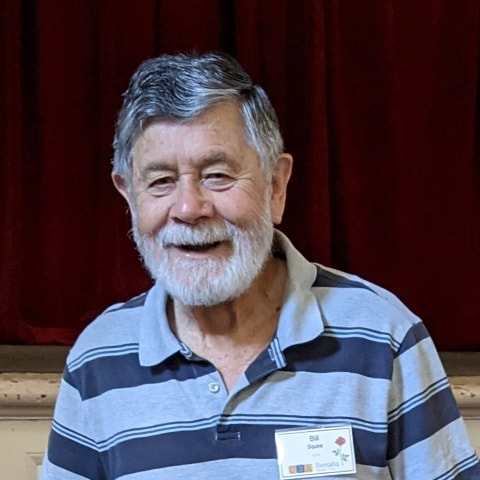
    Bill Squire 5762 6334

    Meeting Times

    2nd and 4th Friday
    10 am to 12 noon. 

    U3A Meeting Room 1 Fawckner Drive

    Categories

    All
    Andriessen
    Anna Clyne
    Arvo
    Bach
    Beethoven
    Beethoven 2020
    Berezovsky
    Berlioz
    Bernstein
    Bizet
    Brahms
    Bruch
    Bruckner
    'Camina Burana'
    Charpentier
    Chopin
    Christmas Music
    Clara
    Corelli
    Debussy
    Dvorak
    Elgar
    Fanny
    Faure
    Fauré
    Florence Price
    Gabriel Fauré
    Gershwin
    Grieg
    Handel
    Haydn
    Hess
    Hildegarde Of Bingen
    Hoffmeister (Viola Conc)
    Holst
    Janáček
    Jenkins
    Korngold
    Li Huanzhi
    Liszt
    Lombardini-Sirman
    Louise Farrenc
    Ludwig Van Beethoven
    Luis Spohr
    Maria Antoine Walpurgis
    Marie Jaëll
    Mayer
    Mendelssohn
    Messiah
    Mozart
    Music Of Ukraine
    Mussorgsky
    Neruda
    NIgel Westlake
    Ozawa
    Poston
    Praetorious
    Princess Anna Amalia
    Prokofiev
    Rachmaninov
    Ravel
    Respighi
    Richard Strauss
    Rimsky Korsakov
    Rimsky-Korsakov
    Rossini
    Saint Saens
    Saint-Saens
    Salute To Grainger
    Schoenberg
    Schoenfeld
    Schreker
    Schubert
    Schumann
    Shostakovich
    Sibelius
    Smetana
    Stamitz
    Stravinsky
    Tailleferre
    Tartini
    Tchaikovsky
    The Armed Man
    The Strauss Family
    Toscanini
    Vaughan Williams
    Vaughan-Williams
    Verdi
    Wagner
    Women Composers
    Yoko Ono

    Archives

    November 2025
    October 2025
    September 2025
    August 2025
    July 2025
    June 2025
    May 2025
    April 2025
    March 2025
    February 2025
    November 2024
    October 2024
    September 2024
    August 2024
    July 2024
    June 2024
    May 2024
    April 2024
    March 2024
    February 2024
    November 2023
    October 2023
    September 2023
    August 2023
    July 2023
    June 2023
    May 2023
    April 2023
    March 2023
    February 2023
    November 2022
    October 2022
    September 2022
    August 2022
    July 2022
    June 2022
    May 2022
    April 2022
    March 2022
    February 2022
    November 2021
    October 2021
    September 2021
    July 2021
    June 2021
    May 2021
    April 2021
    March 2021
    February 2021
    November 2020
    September 2020
    July 2020
    June 2020
    May 2020
    March 2020
    February 2020
    November 2019
    October 2019
    August 2019
    July 2019
    June 2019
    May 2019
    April 2019
    March 2019
    February 2019
    December 2018
    November 2018
    October 2018
    August 2018
    July 2018
    May 2018
    April 2018
    March 2018
    December 2017
    November 2017
    October 2017
    September 2017
    August 2017
    July 2017
    June 2017
    May 2017
    March 2017
    February 2017
    November 2016
    October 2016
    September 2016
    August 2016
    July 2016
    June 2016
    May 2016
    March 2016
    December 2015
    November 2015
    October 2015
    September 2015
    August 2015
    July 2015
    June 2015
    May 2015
    April 2015
    February 2015
    January 2015

We acknowledge the traditional owners of the land on which we meet and pay our respects to their elders - past, present and emerging.
Picture
News
​Newsletter
Facebook Page
​
Program Suggestions
​CO-VID Safety

U3A Benalla Flier 2026 
Membership Application/Renewal
​
Semester 1 Program Guide 2026
Semester 1 Timetable with Dates 2026
Developed and maintained by members, this website showcases U3A Benalla 
​Photographs - U3A members; Benalla Art Gallery website; ​Weebly 'Free' images;Travel Victoria and State Library of Victoria
Photo from TrishaLyn