U3A Benalla
  • Home
  • Benalla
    • Benalla
    • Benalla District
    • Who, What and Where? - Benalla Rural City
  • About
    • Our U3A
    • President's Page
    • Executive Committee
    • Convenors
    • Policies
    • Newsletter
    • Website
  • Groups
    • 2026 Groups
    • Past Groups
    • Program Ideas
  • A-Coi
    • 'A Taste of Art'
    • American History
    • Art Appreciation
    • 'As Time Goes By'
    • Australian Shares and Stock Market
    • Be Connected - Tech Advice
    • Birdwatching
    • Brain Games - Neurobics
    • Car Torque
    • Cards '500'
    • Chat n' Chew
    • Coin Collectors
  • Col-F
    • Collectors
    • Community Singing
    • Come and Learn Croquet
    • Creative Writing
    • Critical Thinking
    • Demystifying Psychology - Discussion Group
    • Digital Up Skilling for Lifelong Learners
    • Easy Bushwalking
    • Exercises for Fun
    • Exploring the Universe
    • Family Research
    • Film Discussion
  • G-Pi
    • Garden Appreciation
    • Garden Team
    • German >
      • German Home
      • Lessons
    • Learning and playing traditional Celtic tunes
    • Let's Talk Books
    • Mahjong
    • Meet and Mingle
    • Music Appreciation
    • Page Turners
    • Patchwork and Craft
    • Pickleball
  • Pl-W
    • Play Reading
    • Poetry Appreciation
    • Politics & Current Affairs
    • Recorder
    • Singing for Fun
    • Social Golf
    • Sustainability/Stock & Land
    • Tech Talks
    • Train Buffs
    • Ukes4Fun
    • Using My Android Mobile Phone
    • Wine Appreciation
  • Join
    • Join Us
    • Membership Application/Renewal Form
    • Program Guide 2026
    • Timetable with Dates 2026
    • Venues and Maps
  • News
    • News
    • March Newsletter
    • 'What's On' Calendar
    • Monthly Calendar
    • U3A Benalla Online - Emails, Website and Facebook
  • FB
  • Gallery
  • Links
    • Links and References
    • U3A Network Victoria
    • Seniors Online Victoria
    • U3A Albury Wodonga
    • U3A Beechworth (Indigo U3A)
    • U3A Bright
    • U3A Goulburn Valley
    • U3A Murrundindee East
    • U3A Wangaratta
  • Contact

November - Handel, Brahms, Respighi, Bach, Berlioz and others!

28/11/2025

 
​“Most people don’t care who’s on charge so long as someone is”, wrote author Tanya Huff in her book of heroic fantasy stories. That could not be said about George 1st – King of England in the early 18th century. German-speaking, uncharismatic and not especially intelligent, George I was unpopular, and opposition politicians flocked to support his eldest son, the future George II. His response was to stage a grand royal event on a barge on the River Thames as a publicity-boosting spectacle, designed to impress Londoners and steal the spotlight from the prince, as well as to convey a message to him as to who is in charge. For that event the king commissioned Handel to compose music for the occasion, - giving us what we know today as “The Water Music”.

Not so forthcoming was Johannes Brahms. For some years, uncertain in his work and his life and his income, Brahms retreated into a kind of musical wilderness. But out of this wilderness experience came his “Serenade No. 2 for Orchestra”. Tuneful and largely cheerful, the work was well received publicly which did much to restore his self-confidence, paving the way for the greater things which were to come from his hand.

Fascist dictator Benito Mussolini was a great admirer of the composer Respighi’s music, prompting some to call into the question Respighi’s own political affiliations and sympathies. Respighi, however, was a man deeply attuned to the immense richness of his nation’s historical and artistic heritage. That's one reason why Respighi, a proud Bolognese, was attracted to the Italian capital as a source of cultural inspiration. He moved to Rome in in his mid-thirties to teach composition at the Conservatorio di Santa Cecilia and from this, among other similar compositions, came his “Fountains of Rome” – describing aesthetic impression made on him, the ‘sentiments and visions’ inspired, as he put it, by four exquisitely sculpted Roman fountains, ‘contemplated at the hour in which their character is most in harmony with the surrounding landscape, or their beauty appears most impressive to the observer’.

The final session for the year was given over to the anticipation of the coming Christmas season. A smorgasbord of music for the season - works by Corelli, Berlioz, Charpentier, Praetorious, and a few in lighter vein, rounded off an enjoyable musical year. The details (notes and recordings) are posted below.

Many thanks to all who have showed appreciation and support in the presentation of programmes throughout the year. 
​I look forward to the company of any and all who wish to be part of our musical adventures in 2026.
​
Bill Squire.

Session Notes 14th November
Handel Water Music - Suite No.2
Brahms - Serenade NO. 2]
Respighi - Fountains of Rome
Bach - Keyboard Concerto No.2

Session Notes 28th November
Hess - Christmas Overture
Corelli - A Christmas Concerto
Berlioz - Herod's Aria
Berlioz - Shepherds' Farewell
Berlioz - Trio for Harp and Flutes
Charpentier- Noels sur les Instruments
Praetorious - In Dulce Jubilo
Poston - Jesus Christ the Apple Tree
Vaughan Williams (Collection) - The Gloucester Wassail
Figgy Pudding Song

August - Brahms, Tchaikovsky and more...

26/8/2025

 
“If you write with someone looking over your shoulder you will never write”. Long before African-American poet Nikki Giovanni spoke those words, both Brahms and Tchaikovsky knew the full weight of their meaning. Brahms, touted in his early years as a composer that he would be the successor to Beethoven, felt for some time he was living in Beethoven’s shadow. Consequently, he often fought with expectations and fell into bouts of what you might call “obstructive perfectionism”. If he was to be seen as Beethoven’s successor, he then wanted to make sure his work would be a success. It’s why he took him 21 years - until mid-life - to compose a symphony. Happily, once that “monkey was off his back’, as it were, and Beethoven had been dead for 50 years, his 2nd Symphony followed in a matter of months.

Tchaikovsky was homosexual – something not all approved of either in ‘society’ or realms of Russian officialdom. Either to counter or to hide his nature – or maybe both -  Tchaikovsky entered into marriage with a female pupil. Either way the marriage was a disaster and Tchaikovsky fled from it after a couple of months to Italy and Switzerland. Coming to terms with his homosexuality, he eventually settled down to compose and his Violin Concerto arose from his greater degree of self-acceptance. Brahms’ 2nd symphony and Tchaikovsky’s violin concerto each provided a foundation for our August programmes, where also we heard compositions by Haydn, Mozart and, of course, Beethoven. Links to the video recordings used and the notes for each session are listed below.
​
Bill Squire.

Session Notes and links to music

​Friday 8th August
​
Session Notes 

Beethoven Symphony No.4
Brahms - Symphony No.2: 
Mozart - Exsultate Jubilate:

​Friday 22nd August 
​
Session Notes


Beethoven - Egmont Overture
Tchaikovsky - Violin Concerto
Haydn - Symphony No. 44
Bach Cantata - Jauchzet Gott in Allen Landen

June - a focus on composer Erik Korngold

27/6/2025

 
When Erik Korngold was serving in the first world war as music director for his regiment, the General once remarked: “Isn't it a little fast, Korngold? The men can't march to that”. To which Korngold replied: “Ah yes, well, you see Sir, this was composed for the retreat”. Being Austrian by birth , but of Jewish descent, Korngold, a few years later, was to organise his own “retreat”, escaping to the USA when the Nazi regime came to power. Although composing scores for opera was his forte, Korngold was persuaded by Warner Brothers to write incidental music for films. He regarded his films as ‘operas without singing’, and it is said of him: “he was the musical prodigy who brought the sound of Wagner and Puccini to Hollywood”. Sensing, however, that when a film left public view so did his music, Korngold returned to more serious composition. His violin concerto nearly didn’t make it past its premiere. Panned by critics as “more corn than gold” it rocketed to fame when no less a violinist than Jascha Heifitz took it on board, and the rest is history, as they say. Interestingly the opening melody is the flight/love theme from the film “Another Dawn” – which Korngold had envisaged as a concerto theme years before the film. This concerto was the foundation on which the second of our sessions for June was based: a Cuban Overture by George Gershwin, a Spanish dance by Maurice Ravel, and the Symphonic Suite from Leonard Bernstein’s West Side Story making up the programme.

The month’s earlier session was somewhat more traditional, although Brahms’ 3rd Symphony was not regarded by the composer as such, casting it as ‘contemporary’. Seen by some as ‘modernist’ and ‘romantic’, the symphony does break away from common convention ever so slightly - its successive movements, for example, each end quietly. Dvorak’s Carnival Overture, a Chopin Polonaise, and a piano concerto by Felix Mendelssohn scintillatingly played by Stephen Hough, served, however, to keep the programme in ‘traditional’ mode. Session notes and recordings played may be accessed by clicking on the relative links below.

Bill Squire.
​
 
13th June

Session Notes
Dvorak - Carnival Overture
Brahms - Symphony No.3
Chopin - Polonaise Opus 44
Mendelssohn - Piano Concerto No.1

27th June

Session Notes
Gershwin - Cuban Overture
Korngold - Violin Concerto
Ravel - Alborada del Gracioso
Bernstein - Symphonic  Dances from West Side Story

"Never let truth get in the way of a good story"... Verdi, Schubert, Prokofiev, Elgar and Brahms ...

25/2/2025

 
“Never let truth get in the way of a good story”. So said Mark Twain, supposedly, whose writings often blurred the lines between truth and fiction. That axiom was well in vogue long before Mark Twain.

The librettists for Verdi’s opera Nabucco and Rossini’s La Cenerentola both took liberties with the original story, embellishing or altering characters or circumstances to make their narratives more compelling or entertaining. Happily, in both cases their actions didn’t affect the overtures to either, which introduced each of our February sessions.

Franz Schubert was also bitten by the same bug when he set to music a poem called “The Trout”. Although the poem is an analogy (of a fisherman using underhand tactics to capture a fish) warning young women to be wary of advances made by men; Schubert, having no time for such moralism, left out the all-important last verse making his song more about annoyance at the trickery used to catch the fish. Again, happily, the alteration of the story didn’t get in the way of the music when Schubert wrote his Quintet in A major for which his famous song “Die Forelle” (“The Trout”) became the inspiration.

Prokofiev was tempted to make some modification to the Romeo and Juliet story, but, ultimately, thought the better of interfering with Shakespeare. Because, however, the premiere of his ballet of the play was delayed by intrigue and skullduggery, he extracted three suites from his composition each of which has the events of the story out of sequence. And even those suites vary today according to the whim or preference of orchestra conductors.

No such liberties were taken by Elgar when he responded to a commission to compose a violin concerto. Although it was more than a bit long for a concerto, the work takes us on an extended tour of Elgar’s soul which has been described as “all pure, unaffected music”.

“Music of the soul” is descriptive also of Brahms’ Horn Trio. Composed in the picturesque seclusion of Germany’s Black Forest as Brahms mourned the death of his mother, the work is a combination of adventure, nostalgia, and lament. Such was the music which opened our year 2025.

Links to the notes and the recordings played can be accessed below.


Bill Squire
Session Notes - 14th February
Verdi - Overture  to Nabucco
Verdi - Nabucco - Complete Opera
Schubert - The Trout (Song)
Schubert - Piano Quintet in A (The Trout)
Brahms - Horn Trio

Session Notes - 28th February
Rossini - Overture to La Cerenterola
Elgar - Violin Concerto
Prokofiev - Romeo and Juliet Suite
Prokofiev - Romeo and Juliet Balcony Scene (danced)

August - 'Why fit in when you are born to stand out?'

26/8/2024

 
“Why fit in when you are born to stand out” is an ‘Elephant-in-the-Room’ quote often attributed to children’s author Dr Suess.

It could be applied to Johannes Brahms for whom Beethoven was the ‘elephant-in-the-room’ when it came to symphonic writing. Living in the shadow of Beethoven, Brahms was reluctant to compose a symphony for fear of it being compared to those of Beethoven. Hence it took him at least fourteen years to complete his first symphony.

It could be applied to Gabriel Fauré when he composed music for that classic ‘elephant-in-the-room” subject “death”. Faure’s Requiem is unique. He doesn’t comply totally with the traditional text. The anguish, loss and horrors of Death and Judgement Day, common to musical settings by other composers, are left by the wayside. Fauré concentrates on the true meaning of the word "Requiem", or "rest". His Requiem is about peaceful acceptance and release, and the music is serene, elevating, comforting.

Beethoven’s own ‘elephant-in-the-room’ was his ‘Septet for Wind and Strings’. The concert-going public loved it so much to the detriment of their acceptance of other works of his - works which Beethoven considered superior - that he could not bear to talk about it. “I wish I had burnt it”, he is reputed to have said of the Septet. 

For your interest and enjoyment here are the links to the notes and recordings for these and other works which occupied us in the month of August.
 
Session Notes 9th August
Introduction to Academic Festival Overture
Brahms - Academic Festival Overture
Beethoven - Septet
Webern - Langsamer Satz
Mozart - Piano Concerto No. 12
 
Session Notes  23rd August
Beethoven - Prometheus Overture
Brahms - Symphony No.1
Faure Requiem - Netherlands Choir
Faure Requiem - Kings College Choir
Faure Requiem - Latin to English Text
 
Bill Squire.

"War, love, family, tragedy: you name it and music has it"

30/3/2023

 
War, love, family, tragedy: you name it and music has it. Add in a dash of artistic influence and a bit of a ‘walk in the park’ and you have a quick guide to our March programmes. 

​Session one started out with Wagner’s overture to Lohengrin – an opera about fairy-tale love that ends in tragedy. Beethoven loved nothing more to relieve the frustrations of his encroaching deafness than to go for a nature walk – the sounds he would hear leading him to compose his sixth (pastoral) symphony. Maurice Ravel wrote a concerto which literally can be played with one hand behind your back. His Concerto for the Left Hand being commissioned by a pianist/soldier who lost an arm fighting in the first world war.

First up in session two was Beethoven’s Coriolan Overture written for a play about a fifth century Roman general whose ‘turncoat’ decisions led to his death at the hands of his soldiers – or perhaps he died at his own hand? Brahms, who was never a violinist, struck up a close friendship with one who was the premier violinist of the day. This led to a violin concerto that is one of the most recorded in the violin repertoire. Its premiere saw Brahms as the conductor of the orchestra and his friend as the soloist. A Brahms encore was composed in honour of another of his friends - an artist who died tragically at a young age. “Nänie” is sometimes referred to as Brahms’ “Litte Requiem” (as distinct from his much longer and grander “German Requiem”.

To top off the month’s musical journey Gershwin’s ‘Rhapsody in Blue’ – the inspiration for the name coming from Whistler’s painting “Nocturne in Blue and Green”. Written in a hurry (most of it on a train journey) and premiered even before the solo part had been put to paper (Gershwin himself being the pianist), the work went on to become an all-time American classic. You can read the detail and find the links to the music recordings below.  

Bill Squire

10th March

Session Notes
 
Wagner - Prelude to Act 1 Lohengrin
 
Beethoven - Symphony No.6
 
Why Ravel wrote a concerto for only one hand
 
Ravel - Concerto for the Left Hand
 
24th March
 
Session Notes
 
Beethoven - Coriolan Overture
 
Brahms - Violin Concerto     (Substitute recording for the one played)
 
Brahms - Nanie
 
Gershwin - Rhapsody in Blue
Tchaikovsky, Brahms were the main composers in May

30/5/2022

 
An ancient Chinese philosopher once said: "Being deeply loved by someone gives you strength, while loving someone deeply gives you courage”. This certainly seemed to be the case with Tchaikovsky and Brahms who were the main composers for our music appreciation this month.

Tchaikovsky’s fourth symphony (played at this month’s 1st session) was an expression of his love for Nadezhda von Mech – a wealthy widow who provided him with a generous stipend annually on condition they never meet. He said in a letter to her: “how much I think of you in every bar”.

Brahms was deeply in love with the widow of Robert Schumann. He wrote to a friend: “I believe that I do not have more concern for and admiration for her than I love her and find love in her. I often have to restrain myself forcibly from just quietly putting my arms around her….” While he could never bring himself tell her as much, his first piano concerto (played at our 2nd session) was composed at the height of his admiration for Clara Schumann.

​In addition to these major compositions, there were shorter works by Mozart, Kodaly, Rimsky-Korsakov, Offenbach and Richard Strauss.  You can read all about it and listen to the music by clicking on the links below.
 
 
Session Notes     (13th May)
 
Mozart - Overture to he Marriage of Figaro
 
Tchaikovsky - Symphony No.4
 
Kodaly - Dances of Galanta
 
Rimsky-Korsakov - Capriccio Espagnole
 
Session Notes   (27th May)
 
Offenbach - Overture to Orpheus in the Underworld
 
Brahms - Piano Concerto No.1
 
R. Strauss - Der Rosenkavalier Suite
 
Offenbach - Orpheus in the Underworld, Finale
​

July - Dvorak, Brahms, Shostakovitch, Mussgorsky, Elgar and of course, 'Beethoven 2020'

27/7/2020

 
Our following of the planned MSO concert schedule for July kicked off with a couple of pleasant surprises in Dvorak’s “legends” – 10 piano pieces for four hands and a Beethoven concert aria “Ah Perfido”! To balance out these little known works, a scintillating rendition of an old favourite in Brahms’ Violin Concerto, and maybe “the greatest graduation piece of all time”, in Shostakovich’s First Symphony, rounded out the first session for this month.

“An Anthem for our Time” and “A message of consolation and hope in times of tragedy” is how Brahms’ “Ein Deutsches Requiem” has been described. This was the feature work of the second of our programmes for this month. In a sense then, an appropriate work to listen to and think about as so much of our world is engulfed currently with tragedy and grief on a huge scale. In keeping with that sentiment, Mussorgsky’s “Pictures at an Exhibition” bookends our programme – a memorial to a departed friend. In between there was Elgar’s lengthy Violin Concerto - a work steeped in mystery – and a little-known (or not so often played) Beethoven Overture.

Here are the links to the programme notes, which include  the YouTube links to the music performances:
​
10th July  Beethoven 2020; Anton Dvorak: Johannes Brahms: Dmitri Shostakovich
24th July: Beethoven 2020; Johannes Brahms, Edward Elgar; Modest Mussorgsky

​Interested in joining in the Beethoven Celebrations!  Enjoy the video links from the Beethoven catalogue suggested in the notes.

​
Bill Squire
​27 July 2020
​

June - Franz Liszt and Johannes Brahms

5/7/2019

 
"THE WAR OF THE ROMANTICS"
 
During the second half of the 19th century a schism developed in Europe between composers who represented a ‘futuristic”  approach to music and those who took a conservative approach. Chief among the first was Franz Liszt, while the latter was headed up by Johannes Brahms. This became known as the “War of the Romantics”. The main debates centred  around whether music should be descriptive: something that is inspired by art or literature or other external ideas; or whether music should be simply “pure” or “absolute” or “classical”.
 
Brahms’ ‘school’, who followed ‘Classical’ principles and looked back to the great masters of the past, such as Bach, Haydn, Mozart and especially Beethoven, were labelled 'conservatives'. Proponents of the Romantically-inspired ‘New German’ music, principally Liszt and company, drew widely on literature and painting, breaking the boundaries of classical forms to make music which was freely expressive in subject matter, structure and harmony.
 
Our June programmes featured music by each of Liszt and Brahms. You can read the programme notes for each session by clicking on the links below - the notes also contain the Youtube links to the music selections.
 
As for who was the greater composer, I guess it boils down to personal taste or musical preference.

​Bill Squire

Class Notes for June- click on the composer's name to link to document.

June 14th - Franz Liszt
​

June 28th - Johannes Brahms

    About Music Appreciation

    Learning about and listening to classical music from across the ages to the present day is what we do.

    Our twice monthly
    sessions feature at least one major composition and a couple of shorter works. They are presented in video format by world class artists performing in the great concert halls of the world so that you can see and hear the music in
    performance.

    ​Full notes relating to each music work, the composers and the artists are provided to assist your listening and learning experience.

    If you would like to know more about and enjoy the music that has helped shape our world, we would welcome you joining us on the 2nd and 4th Fridays each month February to November 10am to 12noon.

    Convenor and Contact Details

    Picture
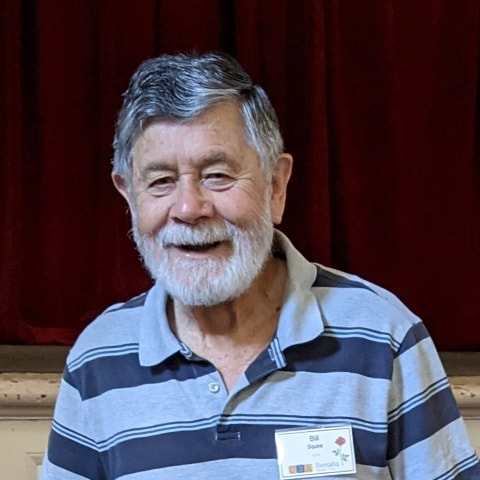
    Bill Squire 5762 6334

    Meeting Times

    2nd and 4th Friday
    10 am to 12 noon. 

    U3A Meeting Room 1 Fawckner Drive

    Categories

    All
    Andriessen
    Anna Clyne
    Arvo
    Bach
    Beethoven
    Beethoven 2020
    Berezovsky
    Berlioz
    Bernstein
    Bizet
    Brahms
    Bruch
    Bruckner
    'Camina Burana'
    Charpentier
    Chopin
    Christmas Music
    Clara
    Corelli
    Debussy
    Dvorak
    Elgar
    Fanny
    Faure
    Fauré
    Florence Price
    Gabriel Fauré
    Gershwin
    Grieg
    Handel
    Haydn
    Hess
    Hildegarde Of Bingen
    Hoffmeister (Viola Conc)
    Holst
    Janáček
    Jenkins
    Korngold
    Li Huanzhi
    Liszt
    Lombardini-Sirman
    Louise Farrenc
    Ludwig Van Beethoven
    Luis Spohr
    Maria Antoine Walpurgis
    Marie Jaëll
    Mayer
    Mendelssohn
    Messiah
    Mozart
    Music Of Ukraine
    Mussorgsky
    Neruda
    NIgel Westlake
    Ozawa
    Poston
    Praetorious
    Princess Anna Amalia
    Prokofiev
    Rachmaninov
    Ravel
    Respighi
    Richard Strauss
    Rimsky Korsakov
    Rimsky-Korsakov
    Rossini
    Saint Saens
    Saint-Saens
    Salute To Grainger
    Schoenberg
    Schoenfeld
    Schreker
    Schubert
    Schumann
    Shostakovich
    Sibelius
    Smetana
    Stamitz
    Stravinsky
    Tailleferre
    Tartini
    Tchaikovsky
    The Armed Man
    The Strauss Family
    Toscanini
    Vaughan Williams
    Vaughan-Williams
    Verdi
    Wagner
    Women Composers
    Yoko Ono

    Archives

    February 2026
    November 2025
    October 2025
    September 2025
    August 2025
    July 2025
    June 2025
    May 2025
    April 2025
    March 2025
    February 2025
    November 2024
    October 2024
    September 2024
    August 2024
    July 2024
    June 2024
    May 2024
    April 2024
    March 2024
    February 2024
    November 2023
    October 2023
    September 2023
    August 2023
    July 2023
    June 2023
    May 2023
    April 2023
    March 2023
    February 2023
    November 2022
    October 2022
    September 2022
    August 2022
    July 2022
    June 2022
    May 2022
    April 2022
    March 2022
    February 2022
    November 2021
    October 2021
    September 2021
    July 2021
    June 2021
    May 2021
    April 2021
    March 2021
    February 2021
    November 2020
    September 2020
    July 2020
    June 2020
    May 2020
    March 2020
    February 2020
    November 2019
    October 2019
    August 2019
    July 2019
    June 2019
    May 2019
    April 2019
    March 2019
    February 2019
    December 2018
    November 2018
    October 2018
    August 2018
    July 2018
    May 2018
    April 2018
    March 2018
    December 2017
    November 2017
    October 2017
    September 2017
    August 2017
    July 2017
    June 2017
    May 2017
    March 2017
    February 2017
    November 2016
    October 2016
    September 2016
    August 2016
    July 2016
    June 2016
    May 2016
    March 2016
    December 2015
    November 2015
    October 2015
    September 2015
    August 2015
    July 2015
    June 2015
    May 2015
    April 2015
    February 2015
    January 2015

We acknowledge the traditional owners of the land on which we meet and pay our respects to their elders - past, present and emerging.
Picture
News
​Newsletter
Facebook Page
​
Program Suggestions
​CO-VID Safety

U3A Benalla Flier 2026 
Membership Application/Renewal
​
Semester 1 Program Guide 2026
Semester 1 Timetable with Dates 2026
Developed and maintained by members, this website showcases U3A Benalla 
​Photographs - U3A members; Benalla Art Gallery website; ​Weebly 'Free' images;Travel Victoria and State Library of Victoria
Photo from TrishaLyn