U3A Benalla
  • Home
  • Benalla
    • Benalla
    • Benalla District
    • Who, What and Where? - Benalla Rural City
  • About
    • Our U3A
    • President's Page
    • Executive Committee
    • Convenors >
      • Convenors
    • Policies
    • Newsletter
    • Website
  • Groups
    • 2026 Groups
    • Past Groups
    • Program Ideas
  • A-Coi
    • 'A Taste of Art'
    • American History
    • Art Appreciation
    • 'As Time Goes By'
    • Australian Shares and Stock Market
    • Be Connected - Tech Advice
    • Birdwatching
    • Brain Games - Neurobics
    • Car Torque
    • Cards '500'
    • Chat n' Chew
    • Coin Collectors
  • Col-F
    • Collectors
    • Community Singing
    • Come and Learn Croquet
    • Creative Writing
    • Critical Thinking
    • Demystifying Psychology - Discussion Group
    • Digital Up Skilling for Lifelong Learners
    • Easy Bushwalking
    • Exercises for Fun
    • Exploring the Universe
    • Family Research - Getting Started
    • Film Discussion
  • G-Pi
    • Garden Appreciation
    • Garden Team
    • German >
      • German Home
      • Lessons
    • Learning and playing traditional Celtic tunes
    • Let's Talk Books
    • Mahjong
    • Meet and Mingle
    • Music Appreciation
    • Page Turners
    • Patchwork and Craft
    • Pickleball
  • Pl-W
    • Play Reading
    • Poetry Appreciation
    • Politics & Current Affairs
    • Recorder
    • Singing for Fun
    • Social Golf
    • Sustainability/Stock & Land
    • Tech Talks
    • Train Buffs
    • Ukes4Fun
    • Using My Android Mobile Phone
    • Wine Appreciation
  • Join
    • Join Us
    • Membership Application/Renewal Form
    • Program Guide 2026
    • Timetable with Dates 2026
    • Venues and Maps
  • News
    • December Newsletter
    • News Blog
    • 'What's On' Calendar
    • Monthly Calendar
    • U3A Benalla Online - Emails, Website and Facebook
  • FB
  • Gallery
  • Links
    • Links and References
    • U3A Network Victoria
    • Seniors Online Victoria
    • U3A Albury Wodonga
    • U3A Beechworth (Indigo U3A)
    • U3A Bright
    • U3A Goulburn Valley
    • U3A Murrundindee East
    • U3A Wangaratta
  • Contact

'A year that changed me - mid-1951 to mid-1952'

10/11/2025

0 Comments

 
In 1951 our family moved from Ballarat to Geelong. To my joy, the annual sporting visit of Ballarat High School to Geelong High was scheduled for that very day so I blithely decided I’d travel to Geelong with the school and then find my way to our new home.

I had some vague directions and the address. A wonderful new acquaintance took me under her wing, travelled with me to Belmont and found the right tram stop, then remained on the tram as it travelled back to the city and out to North Geelong where she lived.

Within a day or so, I met Lorraine (aka Larry) who lived over the road and was a year younger than me. We rode the three miles to school together from then on and became firm friends.

In Ballarat my consuming interest had been in Girl Guides, held in the church hall next door. I really wanted to become a Queen’s Guide, the highest award attainable. I had finished my Second Class tests and was preparing for my First Class.

The problem was that Belmont didn’t have a Guide Company. Initially I caught the tram into Yarra Street in the city each Tuesday night but it was a disappointing substitute as it was a group of young Guides, none of whom had even passed Second Class.

After some months, I left Yarra Street as I had found a Guide Company from Morongo School which met in the city after school on Wednesdays. This was a much more satisfactory group except that I was the only student not at Morongo. I stayed until I had finished First Class and then gave it away.

In the meantime, Belmont provided all sorts of possibilities, mainly centred around the Methodist church. Ten tennis teams, three cricket teams, a vibrant youth group were on the doorstep. I had never been a star sportsperson but was welcomed into the D Grade tennis team at the bottom of the senior division.

The Youth Group opened even more doors. Giving concerts seemed to be a specialty and before long, Larry and I were putting on sketches together. I’m not sure where the scripts came from but we were extremely versatile and willing to have a go at anything. My father drew the line when I had cast myself as a drunk!

I became one of the more junior members of the church choir and taught a Sunday School class at the age of fifteen.

In 1952 I moved up to Form 5 or ‘Leaving’ as it was known. I was selected as one of the two prefects from Form 5, the other five being from Form 6. Ballarat had had a superb, somewhat classical, music teacher but Geelong put on a Gilbert and Sullivan end-of-year performance.

The church youth group included a good many ‘couples’ and probably the most significant thing for the year was Larry suggesting the name of a boy who was currently unattached and who might be suitable for me.

​I wasn’t quite sure who the boy was.

Some weeks later I walked home with him from a church meeting in Geelong, a week before my sixteenth birthday.

​I ended up marrying him six years later.


Carmyl Winkler
October 2025
0 Comments

'Advice'

19/10/2025

0 Comments

 
Comparisons are odious.

Where’er you plant a rose my lad, a thistle cannot grow.

A gentleman is one who uses a butter knife while dining alone.
​The first two would come under the heading of advice but the third was just an observation.

My Dad didn’t indulge in a lot of small talk. He was a somewhat reserved man of Scottish descent. But if I think of him, I think of those three sayings. And I like them.

I was ruminating over advice that had been passed on to me and not a lot came to mind. I possibly was someone who went their own way and didn’t listen to what others had to tell me.

When I complained that the only thing I could find to eat after school was Dad’s ‘buns’ (other people called them ‘rock cakes’), my mother suggested I could cook whatever I liked. So it was that each Saturday morning my sisters and I pulled out the recipe book and each baked whatever we wanted for the week’s school lunches and after-school fillers.

When I started High school, I had to choose whether to learn French or Latin. My Dad suggested I choose Latin, despite the other members of the family, before and after, going with French. I was glad I took his advice and found five years of Latin taught me much about grammar and even more about the origins of words.

One time I can remember advice being given was when I was about to move to Melbourne to go to university. I had had a local boyfriend since I was sixteen and my mother suggested that I didn’t bind myself to this relationship as I would meet some very fine boys at university. Of course, that piece of advice made me more determined than ever to reject her idea. I ended up married to that particular person for 63 years.

And after all those years, I could offer some advice myself.
​If you can’t afford a new dress, make one yourself, including your wedding dress!
​But rather more importantly:
​Get to know your neighbours.

Accept people as they are and don’t judge.
​
Live in the present.
​​Apparently most people spend 80% of their lives either thinking about what happened yesterday or what might happen tomorrow.

Perhaps the advice that has made my life what it has been is:
​Believe in yourself.
​Living practically all my married life in small country towns, I have had to make my own life choices. My qualifications did not fit outside Melbourne so my life after the children were at school was spent doing all sorts of things, paid and unpaid, that presented themselves.

We started a ‘Hello Group’ for Mums to have a weekly cuppa together.  A friend and I decided to teach ourselves to play the flute and had fun with duets. I had a steep learning curve with the job of Youth Worker for six years. I taught Indonesian for over twenty years with the qualified teacher sitting in on the sessions. I took a Welcome Pack to anyone who had just moved to our town. And so it went on.
Enjoy life. You only live it once.


Carmyl Winkler
October 2025
0 Comments

'Sixty-three years ago' (Written on 17 July 2025)

5/9/2025

0 Comments

 
Sixty-three years ago this morning we were speeding the five kilometres in to the hospital in a blue and white sedan belonging to Universitas Syiah Kuala.
 
The driver was obviously concerned that the baby might arrive before we got there and dropped me off with relief.
 
After the rush, everything calmed down. The Chinese doctor examined me and thought the baby could arrive that evening or even the next day. She asked if I would like Australian food but I assured her I’d been on a rice diet for a year. She suggested one Australian meal as a special treat so of course I agreed.
 
The patients’ rooms opened off the verandah where the nurse’s desk was stationed. I sat out on the verandah and continued embroidering a little elephant on the corner of a matinee jacket I had made.
 
After lunch everybody was sent off to their rooms for an hour’s rest. I felt very nervous about this as I lay down on my bed, as I thought the baby might not want to wait that long. In a little while I went out to the nurses and tentatively suggested that I thought the baby might be coming soon.
 
They were quite cheerful and walked me up to the end of the verandah to the delivery room. As far as I could see, the room was identical to mine except for a rubber sheet on the mattress.
 
The two doctors in the town both had private practices in the afternoon, so a midwife very capably delivered my baby girl an hour or so later. There were no trolleys so four nurses took my hands and feet and carried me the short distance back to my bed.
 
After a big day – the main English exam for all Don’s several hundred students had been on that afternoon - he managed to leave early and came back to the hospital to greet his wife and be introduced to his new beautiful daughter.
 
Over the next four days Don spent many hours collecting nappies which awaited him each day in a heap on the floor, washing them at the well, drying them and then bringing them back to the hospital and enjoying a chat while he was there. Neighbours were very kind, sending in food and organizing transport, but it was a great relief when we all went home together.  
The midwife came out to visit us a week later to check on Bronwyn’s progress and said that she was a bit concerned because Indonesians usually scream when they are having a baby, but I hadn’t made any noise at all.
 
Incidentally the second night, I did indeed have an ‘Australian’ meal with seventeen pieces of potato round the edge of the plate and a small amount of meat in the middle. When the hospital bill came along the potatoes took up a fair bit of the money required!
 
As far as the records showed, Bronwyn was the first Australian to be born in Aceh.
 
Carmyl Winkler ​
0 Comments

​Emerging - A Chain of Islands

18/8/2025

0 Comments

 
​There is a chain of 17,000 islands between Australia and Malaya. About 900 of these are inhabited with 700 different languages spoken.

India and China were early traders to these islands, bringing with them the Hindu and Buddhist religions, followed a thousand years later by Muslim  Arabians and northern Indians.

In the 1500s, Portuguese sailors discovered spices on some of these islands, a very precious commodity used to preserve food, as well as in medicines and perfumes. British and Dutch traders heard about the Spice Islands and the three nations fought over ownership. The Dutch founded the Dutch East India Company in 1610.

For over three hundred years the Dutch transported spices back to Holland while the islanders worked on the plantations for minimal wages.

By the 1900s, many young people were determined to form their own nation. A 1928 Youth Congress took an oath to form a new country of One Race, One Nation and One Language. The language chosen was a form of Malay and the name of the new nation was to be Indonesia.

The Dutch were not impressed and sent hundreds to a camp in a malarial swamp in Dutch New Guinea, but the young people remained determined.

1939 brought the Second World War and by 1942 the Japanese had entered the Indies. They imprisoned the Dutch and took over the country. Initially regarded as saviours by the islanders, feelings changed as rice crops were transported to Japan.

On 15th August 1945, Japan surrendered, the war was over.

News of this filtered through to the islanders. On 17th. August, a small group met in Batavia, raised the new flag and proclaimed independence for the new nation of Indonesia.

As soon as the Dutch were released, their armies set out to reverse the situation.  After four years of guerilla warfare, world opinion pressured the Dutch to leave and Indonesia was recognized.

And what has that got to do with me?

The Dutch had occupied almost all the public service positions. Suddenly there was no one to fill the gaps.

In 1951, an Australian Volunteer Graduate Scheme was initiated with graduates working for two years on Indonesian wages and living under Indonesian conditions. The scheme began in 1951.

After ten years, most of the positions in Java had been filled by new Indonesian graduates and that is how we ended up in Aceh, the northernmost province of Sumatra, at Universitas Syiah Kuala.
Picture
We arrived in August 1961, the sixteenth anniversary of the proclamation of Indonesia.
Many of the text books were in English, so Don taught English to most of the students in this new university, still being built among the rice fields, and I taught Physics to first-year Veterinary Science students.

There were no native English speakers in the area although some of the lecturers had reasonable English, but this did not apply to the sellers in the market or most of our new friends. Language, cooking and customs were a steep learning curve for our first months.

Our daughter, Bronwyn, was born mid-way through our time in Aceh and we felt we belonged.
Picture
We thought we were going to change the lives of others but ours were the lives that were changed.

Indonesia has been part of our lives ever since – Indonesian visitors, finding Indonesian friends in our communities, Indonesian cooking, twenty five years of teaching Indonesian and so on.

Forty years after leaving, we briefly returned to Aceh. A man came up to Don and said, ‘I remember you. You bought a goat in Pasar Lamnyong and carried it home on your bike.’ So we did leave one memory behind!

And why did I choose this topic?

Because yesterday was the eightieth anniversary of the emergence of the Republic of Indonesia.
 
 
Carmyl Winkler
0 Comments

'My First Boyfriend'

12/7/2025

0 Comments

 
​Walking up Belmont hill was always the time for conversation. As we wheeled our bikes up the steepest pinch we would set the world to rights.

Most people in the church youth group had paired up. Larry was trying to work out someone suitable for me. “What about Don Winkler?” she said. “He’s not with anyone.”

“I don’t know him,” I admitted.

“Oh, he plays tennis,” was the reply.

I obviously discovered who he was because, some months later when a group went into the city for a Babies’ Home Tea, Don Winkler suggested we walk home together since the Sunday trams were very infrequent.

We arrived back about 7.30 and stole into the back of the church for the 7 p.m. service. The minister looked at us quizzically. He was my father. A week later Don turned eighteen and I turned sixteen.

Walking home from evening church became the norm. We would walk the one block to the parsonage and stand outside the back gate and chat for an hour or so. More than once, Dad brought out the empty milk bottles and gave them a rattle as he put them in the box on the other side of the fence, for the milkman in the morning.

Don was one of the tennis team selectors and once dropped himself from A Grade to D Grade so he could partner his girlfriend.

Christmas 1952 came around and Don shyly handed me a present. Inside was a Conway Stewart fountain pen and matching pencil! I had a handkerchief for him. My mother suggested firmly that I give it back. Eventually it was agreed I could keep it and it was my constant companion through Matriculation and University.

Don had left school after Year 9 because he failed in Maths. He had been working at a hardware wholesaler since. In January 1953 he joined the Navy for four months National Service and I was allowed to go to the pictures with him the week before he left.

The following year saw another Navy month and he came home dissatisfied with his job.  He wanted to study further. He left work halfway through the year and enrolled in a correspondence course to complete ‘Intermediate’ (Year 10). Despite hours of study each day and dozens of papers to be completed, he cruised through the arts subjects and failed – Maths! What now?

I had finished my first year at university. We went through the possibilities and he bravely enrolled as a mature aged student at Geelong High School to do his Matriculation. There he found friends, teachers to guide his study, celebrated his 21st birthday and was a valued member of the football and tennis teams. Without Maths, he had to include a language in his studies. Wym van Perrerin taught him Dutch in the garage he lived in, in return for baby-sitting duties. Don passed every subject.

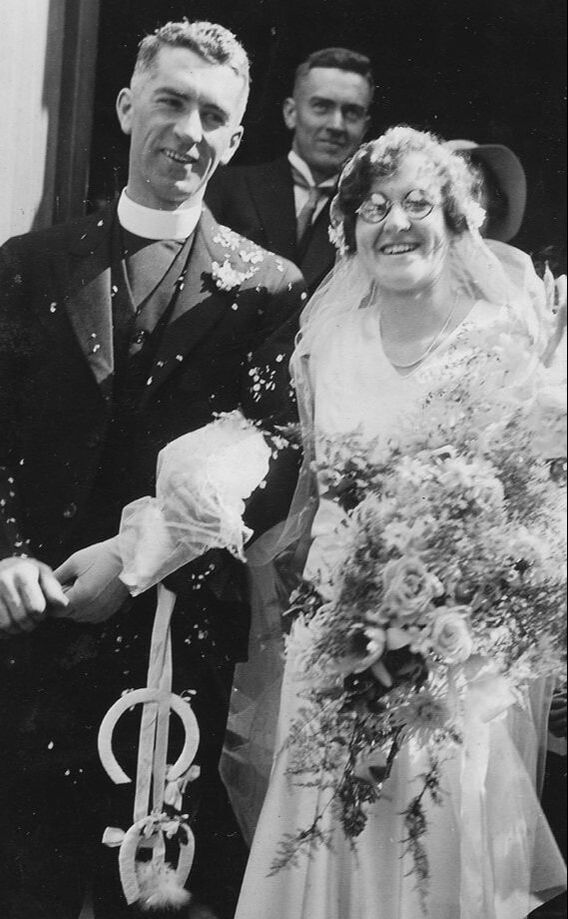
We shared university for one year. By 1958 I had been working for two and a half years, Don was finishing his degree and working part time. In August, in the university holidays, we married, six years and six days after we walked home for the first time.

We were married for sixty-two years.

My first and last boyfriend!


Carmyl Winkler
July 2025
0 Comments

'My Other Life'

9/6/2025

0 Comments

 
​​I pondered this title. What do I do in my spare time? Knitting? That would hardly warrant 500 words. Then I looked at the kitchen table I was sitting at. Paper covering all one side!
A list of facts about Indonesian history which I wanted to turn into a few pages of readable information, some notes on family history, memories that were aroused when I had occasion to revisit the Tallangatta Uniting Church recently, ideas for memoir writing titles. Of course writing is my ‘other life’ although this is no secret to fellow ‘As Time Goes By’ writers.
I found a ‘Junior Age’ certificate, which brought back memories.
Picture
I quickly realized that the ‘Junior Age’ would much prefer a poem about what went on at school than a few lines on the beauty of spring. Each time a poem was published, 9d went into the pocket.
​
Then I pulled out all sorts of other articles I had written over the years, with the intention of providing examples. However, when I found the next oldest manuscript, I was so interested in the topics I had chosen, I decided to forget the remainder and make that the subject for today. It was the editorial for the 1953 Geelong High School magazine.
Picture
​Editorial written by Carmyl in 'Flotsam', Geelong HIgh School Magazine, 1953
I don’t suggest that everyone would have chosen sport, immigrants, atomic science and warfare as material for the yearly editorial, but they were obviously important to me.

I played D grade tennis in our church team but definitely was not a sportswoman. However, we all took an interest in the national cricket and tennis teams, despite the absence of television.

Physics was my favourite subject in that year, partly due to an excellent teacher, and it was interesting that I chose to write on radioactivity and how it could be used for good or evil. I had no idea at that stage that my first post-university job would be working with radiation at Peter Mac.

Memories of war would still have been at the back of my mind, the Korean conflict seemingly hadn’t been resolved and the possibility of an atomic war was too close for comfort. I was a pacifist.

Post-war immigration was still happening and a number of these migrants were welcomed to our home, some as a guest for a meal, others given a weekly hour or two of paid housework, despite our family finances being very low.
​
I wonder what I would write as a seventeen-year-old today.

Carmyl Winkler
​June 2025
0 Comments

'My Happy Place'

15/5/2025

0 Comments

 
“I don’t care what the house is like. It’s the position!” Son Stephen was absolutely right. Over the road and down the track, with the option of crossing the bridge to Jaycee Island or turning up through the free caravan park to the shops.

Take a book back to the library, do some banking, pick up a parcel at the post office or a prescription from the chemist, have a quick check to see if any of my friends are around, looking as though they need a cup of coffee – all just fifteen minutes away!

But the Jaycee option is even better. I’ve cultivated a habit most mornings of walking as far as the exercise station and spending ten minutes there pretending that I’m getting fit. While there I look up at the magnificent Moreton Bay fig tree and rejoice. I’ve taken Tallangatta visitors there just to look at the tree
Picture
Made and Carmyl, Jaycee Island
Meanwhile I keep an eye out for anyone who is passing. Helen has a dog called Stormy, Cheryl has Lola who chases a frisbee, Charlie and the other Cheryl and their dog, Rose, give me a wave from the side path, Heather’s white dog carries a long stick sideways in his mouth.

The check shirt man looks out for any platypus that may be lurking under the water, and the tall fit man whose work sometimes takes him to Tallangatta does push-ups on the bench near the path. Irene used to bring little round pellets of bread for her magpie friends. She doesn’t come any more but always greets me if we happen to meet at Woolworths. I say Good Morning to half a dozen extras whose names I don’t know and they always respond.

Eastern swamphens wander around pecking the soft earth. Last year in the breeding season, a wood duck flew to the top of a very tall gum tree nearby. The top had been lopped and had a sloping edge. How the duck could balance there with its webbed feet, I don’t know. A few weeks later, she proudly brought her little flock of eight ducklings to show me (or at least that was what I hoped it was for!)

The odd kookaburra flies in for a hello. I say good morning to the magpies looking for worms. If I’m early, the cockatoos are still filling the sky with flapping wings and loud cries.
Occasionally, I head down to the exercise spot and think, ‘Hmm…I’ve got a free morning. Maybe I could walk half way round the lake.’ So I walk straight past and feel as if I’m off on an adventure. Sure, it will make for a late breakfast and I’ll be pretty tired but I’ll be so pleased I’ve done it.

Another couple of little bridges, past the footy oval and the Glass House and I’m up on the big bridge. All along the way there have been others who give me a friendly Good Morning. Occasionally I even see someone I know and stop for a little chat.

Over the bridge and a slither down the grassy slope to the path again. A quick check at the Sundial to see if I can work out the time and back past the library, the skate park and back to my special home ground.

Is it any wonder it’s My Happy Place?

 
Carmyl Winkler

0 Comments

'First of April'

20/4/2025

0 Comments

 
​Last Tuesday I came home to find Michael had sent me an unusual email.
Picture
Fancy Peter Dutton coming to Benalla- not just Benalla but to Rebbechi Court! I looked outside to make sure there were no crowds assembling. Maybe I’d missed it. Tuesday morning coffee was a long-standing arrangement but I would have foregone it to see Peter Dutton’s reaction to next-door’s orange galahs hanging in the tree.

I checked with Michael to see if he knew the time of the visit. He didn’t but was sure it would be before midday. This was just after midday, so it looked like I was away when it happened. Bother!

And then, an hour or two later, I discovered I had earned the title of April Fool.

Immediately I thought of twenty-five years ago, when I had rung five-year-old grandson Matthew to tell him that he needed to give a message to the school principal that morning. I don’t remember the exact message – it was something about an elephant let loose in Yarrawonga – but I do remember Matthew’s quavering voice asking me to repeat the message so that he could get it right.

Michael’s son, Joe, was about three when I rang to tell him there was a horse in the toilet. But the reaction I most remember was a year or two later when I rang Joe’s brother Zac, about six at the time, to tell him Melbourne Storm had relocated to Alice Springs. He burst into tears!

When I pondered these times, I felt I had been a very unfeeling Grandma. Those young boys probably didn’t even know what April Fool’s Day was all about.

However, before the day was over I received another email from twenty seven- year-old Zac, now a policeman. After thanking me for my birthday greetings, he said he’d intentionally emailed me that day because he always remembered the Grandma who master-minded pranks on him on multiple occasions in the past and how he loved telling these stories.

I felt forgiven.

He finished the email by letting me know that Anthony Albanese was stopping by Tallangatta bakery that day, for a photo opportunity with a vanilla slice!

April Fooling must have been something of a family tradition as Michael reminded me of the time he put green colouring in a bottle of milk. His father was not impressed.

When I was at school the rules about April Fool’s Day were pretty strict. If you tried to fool someone even one minute after midday, you were the April Fool. On the other hand, after midday, people could stick notices on someone’s back saying ‘Kick me’ and you could feel free to obey the request.

Maybe next year, I’ll be on the lookout for one of the gang maintaining family traditions, thereby turning me into an April Fool. I certainly won’t be ringing any children and leaving them in tears!


Carmyl Winkler   
April 2025
0 Comments

'Reflecting on Covid ...'

16/3/2025

0 Comments

 
​I’d actually forgotten Covid had another name until I read some notes from 2020.

March: ‘White ants make life interesting as does the all-consuming Corona Virus.’

Bakery coffee came in disposable cups, no teaspoons, serviettes, biscuits or cash and you could drink it in the park over the road if you stood on one of the crosses.

May:  Two months later we set up internet banking. We received wonderful CDs and DVDs from the family – videos of comical interpretations of learning and teaching from home, CDs of sons singing together which involved one singing in Benalla and then sending the recording to Melbourne so another son could add his voice in harmony.
​We learned how to join Zoom meetings.
Picture
By June, things must have improved as we entertained visitors and a little later, the Op. Shop re-opened, making $1,000 in the first two days.

In September, we drove over the border to Albury for the first time in months.

But in another three months, things suddenly changed.

​The last day of the year brought the announcement that the border would be closed at midnight. Two of our sons were holidaying on the NSW coast at Merimbula and Bermagui. They drove through the darkness over the Snowy Mountains crossing into Victoria just before midnight, arriving at Tallangatta in the early hours of New Year’s Day, 2021.
Picture
Six weeks later, Don wasn’t feeling well. By six in the evening, I rang for an ambulance and he was taken to Wodonga Hospital. It was Sunday. The next morning he was transferred to Albury and settled in a small room in the inner recesses of the hospital.

Visiting hours were quite strict but family members managed to come and go with plenty of travel between. It was a special time for us all.

By Wednesday he was pronounced a palliative case and we asked that he be transported back to Tallangatta. That couldn’t be arranged until the next day so Michael and I stayed with Don until an hour or two after midnight, then Stephen and Tim came to take over, while we went to have a few hours sleep in a hotel.

Michael’s wife, Karen, was to catch Friday’s train to join us. Tim was organized to take his son to Canberra to start university at the weekend.

The palliative care unit in the small Tallangatta hospital is beautiful. Floor to ceiling windows looked out on the lake, a CD player was on the bench and an adjoining room included a bed, sandwiches in a frig. and tea and coffee for the carer. It couldn’t have been better.

Suddenly new rules. Nobody could get back into Melbourne, nor could anyone cross the Victorian- NSW border after Friday.

Karen cancelled her train journey, Michael drove back to Melbourne and Tim and son, Monty, took over the night time watch at the hospital on Thursday night. Tim slept while Monty sat with Don and the next morning they left early to drive to Canberra by midday so Tim could drive back to Victoria the same day.

Don died that night, 12-02-2021. He would have been delighted with the symmetry.

Incredibly, at the time of the funeral, ten days later, the borders were open and family and friends were all able to be there.

Three months later, I moved to Benalla.


Carmyl Winkler 
​March 2025
0 Comments

'New in Town'

23/1/2025

0 Comments

 
What a position for a house in Benalla! I could walk across to the shops in ten minutes, enjoying birds, trees and glimpses of the lake along the way.
 
But having completed the lovely walk, where was the coffee at the end of it? The nearest block included six cafes.
 
Covid was rife at the time, so I chose a small one, a few doors around the corner – ‘The Cake-Maker’s Daughter’. Not having a phone in my pocket, I gave my details according to the Covid rules and sat outside. The waitress bringing the coffee asked if my name was Carmyl. I said it was. She laughed and said that they had written down Camel! So that was a good start at becoming known.
 
Mak, who made the coffee, was the friendliest person and made me feel very much at home, as did Nichole. It took me more than a year to realise that they were daughter and mother, and that Nichole was indeed The Cake-Maker.
 
My son, Michael, visited and quietly gave Mak $100 as my birthday present. Brilliant! I’d walk in, get my coffee card, hand it over and sit down, no payment required! I might mention that when the money ran out, it was quietly renewed.
 
At Christmas, I gave them a card telling them they had been some of my first friends in Benalla and what a difference they had made to my new town.
 
I took friends and family there for lunch – some of the best lunches I’ve ever come across. I popped in occasionally for a coffee by myself. I took grand-daughters there. But the one constant was Tuesday morning coffee at 10 with a friend.
 
The shop was relatively small with only seven or eight indoor tables, so I often rang early on Tuesday to book a table. One table had two very comfortable basket weave chairs and that was often where we ended up.
 
Bev, who I had got to know through coffee there, would look over at our table as she came through the door and shake her fist with a grin; our church friend, Val, would meet half a dozen mates at the next table; a couple who did morning lake walks would give a wave, Karen from Tomorrow Today would be there to collect coffee for the staff. It was a Tuesday community.
 
We heard about Mak or Nichole’s holidays, we chatted about our doings, birthdays, news items. It made Tuesdays special.
 
Then one Tuesday, I arrived to find Mak in a very agitated state on the phone. I helped her bring in the tables and chairs that had only been out for a brief time.
 
Something was clearly very wrong. I gave her a hug. A sign went up on the door, ‘Due to personal reasons, the shop will be closed until further notice.’
 
And The Cake-Maker’s Daughter never opened again.
 
I can only say that the three years of friendship and coffee those women gave me and so many others, was something I will never forget.


Carmyl Winkler
January 2025
0 Comments

'One Special Time This Year'

8/11/2024

1 Comment

 
‘Namaste’, I said to my new neighbours. They smiled and returned the greeting. Then they apologetically explained that they were from Punjab in the north of India where Namaste was replaced by a different greeting.

A couple of weeks later I rang the doorbell armed with paper, pen and a container of Anzacs. (Ever tried to explain the meaning of Anzac, let alone the fact that it referred to biscuits!)

“Come in, come in,” they welcomed. “Sit down. What would you like to drink?” I wrote down their real names, the names they commonly used and their special greeting. In the meantime, a glass of water appeared along with snacks of nuts and a bowl of grated carrot, coconut, almond meal and condensed milk.

“We’ve never had a neighbour visit us before. Can we show you our wedding photos?” Of course they could, so the laptop was produced. I started to say farewell, but a cup of special chai was being made so I sat down again.

Diwali, the festival of lights, was coming up and I knew the Benalla Festival included a celebration. I dropped in to ask if they were going. They weren’t, because it was on the 4th. November and they wanted to celebrate on the proper date, the 1st.  November. Would I come in and join them? How could I refuse?

I rang the day before to check on the time.  –  Any time. -  Does it include a meal? –  Of course - What time do you eat? -  8 or 9 o’clock.

I duly arrived at 7.30. Raavi had created a beautiful design from coloured powder on the tiles inside the front door. She poured me a glass of juice and proffered a box of cashew sweets. Davy arrived home from work and we ate appetisers – spherical paper-thin balls which you broke open, put in some spicy mixture then covered it with a thin corn soup.

Time for the lighting. Some tiny clay pots, filled with oil and holding a plait of cotton, were placed on the design near the door and carefully lit.
Picture
Then some tea candles were placed on the doorstep and on the front path and lit. Out the back and more tea candles placed on the ground. Raavi flicked a switch and some ‘Christmas-tree-style’ streamers with tiny lights appeared. Then three sparklers were produced, and we waved them around in the air and proclaimed, ‘Happy Diwali’.
Picture
Nine o’clock and time to cook some spiced rice and some chapatis. A vegetarian curry of tofu was produced and some very spicy spears of okra.

Constantly I was assured, “Just try these things and if they are too spicy, don’t eat them.” A final dessert of sweet milky rice with crushed nuts was dished up, with the comment that this had been cooked especially for me in case the other food was not to my taste.

So many times, I was thanked for coming. Could they call me Grandma? Of course. At 9.45 when I got up to leave and walk around the corner, I thanked them heartily and produced my torch. “But we’re coming with you to make sure you get home safely.” And that is exactly what they did!
​
To think that in more than eighty years, that was my first Diwali.


Carmyl Winkler
November 2024
1 Comment

As time goes by ...'Communicating'

20/10/2024

0 Comments

 
Yes, there was a phone in Dad’s study, but I don’t remember ever making a personal call on it.
 
I was in Form 6 when Don went off to National Service in the Navy. I had wangled permission to go with him to see a film before he left but hadn’t really anticipated the opportunity of letter writing. Letters of six or eight pages regularly arrived and were duly answered.
 
The next year I was off to university, so Don’s letters continued, as did letters from my mother. Every Sunday night she wrote to any family member who was away and also to her sister, using carbon paper. The pages would then be sorted so that everyone had a top copy as well as an assortment of later copies.
 
In Indonesia, whenever we had nothing else to do, we’d write letters to a large assortment of family and friends. We had a modest post office in the Mess building next door. Mail seemed to arrive in bundles – none for a while and then a number together. Three weeks was about average time.
 
Sometimes a parcel arrived, mostly containing food such as packet soup. The prize-winning parcel was when my mother wrapped up a baby bath and posted it!
 
Don’s mother was very sick, and we desperately wanted her to know of the arrival of our baby before she died. Don wrote a letter that day and took it into the post office, explaining the urgency. The post-office man put it in his pocket to post in town. That letter never arrived but the next day, we each wrote a letter and they did arrive a few days before Mum’s life ended. The news of her death was received some weeks later from a relative who assumed we already knew. At least it wasn’t unexpected.
 
In contrast, six months later, my twenty-five-year-old sister and her husband died in a car accident. Again, the first letter we received thought we knew about it. Of course, the funeral was well over before we heard the news.
 
There was no fresh milk available in Aceh and a small tin of Danish powdered milk cost a fair proportion of Don’s salary, so the family sent several 3lb. tins over to us when Bronwyn was a baby. They took three months or more to arrive. When we visited Aceh thirty years later, our best friend told us that after we left, some milk arrived, and she used it for her own baby. She hoped we didn’t mind!
 
Back to country living in Australia. No home telephone. Walk around two blocks to the phone box if you wanted to contact your children in Melbourne.
 
Telegrams for important news. One said we had a new nephew named Solomon. We later found out the telegraph lady misheard – he was actually Simon.
 
My mother died unexpectedly. Three successive calls to our neighbour, who graciously called us in for each one.
 
We moved house. We had a phone! Twenty-eight years after we were first married!
 
Another ten years and we bought a computer and learned about emails.
 
Now I even own a rarely-used mobile phone.
 
But where will the great-grandchildren find the old letters to tell them about the past?

 
Carmyl Winkler
​October 2024
0 Comments

​Someone Who Shaped Me  -  ‘Cap’

10/9/2024

0 Comments

 
I started Brownies when we lived in Launceston and loved it. The challenges of doing ‘badges’ and the fun of playing games made Brownie Day a favourite day of the week.
 
Then we moved to Sandy Beach. No Brownies there.
 
Ballarat had a ho-hum Brownie Pack at the Anglican church, but I couldn’t wait until I turned twelve and could start Guides.
 
Friday night in the Methodist Hall next to our house and I’m in Magpie Patrol. My sister Dorothy is our patrol leader. We have two adult leaders, ‘Cap’ and ‘Lefty’ – yes, of course, short for Captain and Lieutenant!
 
Cap, whose other name was Miss Edna Perry rode her bike to Guides from the other side of Ballarat. She had some day job, but we only knew her as our leader. Though quietly spoken, she was definitely in charge. She always had an interesting program prepared which would include the guide promise, a game or two, singing some fun songs and some badge work.
 
The Guide motto was ‘Be Prepared’ and our program reflected this. We learned to tie knots (a Reef must never be replaced by a Granny knot!), learned the Morse Code, how to cope with snake bite, the street names of our surrounding area and so much more.
 
When joining Guides as a tenderfoot, we had to learn the Guide Law and Promise, the salute, hand signals, some knots and facts about the flag, before we could don a uniform and be enrolled.
 
Re-reading the Guide Law – and I know we took it seriously – I was impressed.

  1. A Guide’s honour is to be trusted.
  2.  A Guide is loyal.
  3. A Guide’s duty is to be useful and to help others.
  4. A Guide is a friend to all and a sister to every other Guide.
  5. A Guide is courteous.
  6. A Guide is a friend to animals.
  7. A Guide obeys orders.
  8. A Guide smiles and sings under all difficulties.
  9. A Guide is thrifty.
  10. A Guide is pure in thought, word and deed.
 
After enrolment, it was up to each guide if they wanted to pass further tests, but it was encouraged. There were Second- and First-class badges with a series of tasks to be accomplished. The Queen’s Guide award was the top and had to be finished before we were sixteen. Despite my ambition, I didn’t get that far. In the meantime, there were proficiency badges covering a wide range of skills. We prepared as necessary and then Cap would find an appropriate tester. I did a number of these including Reader, Hostess, Homemaker, Cook, Knitter, Cyclist, Emergency Helper. I loved the challenges.
​
And then one day Cap announced that we were having a Guide Camp, and we were going to sleep in tents! I couldn’t have been more enthusiastic. 
Picture
​​I loved every minute. I came home with a recipe for French Toast – soak a slice of bread in a beaten egg mixture and fry lightly on each side. Ecstasy!
Picture
We left Ballarat when I was fourteen and my wonderful Guide company was never replicated. There were no Guides in Belmont, so I caught a tram into Geelong one night a week. The Guides were young and not very interested in badges. I left there and joined an after-school company from Morongo. They were much more upbeat but, being the only one from another school, I didn’t really belong.
 
I joined a church youth group and became enthusiastic again.
 
But I’ll never forget the Pleasant Street Methodist Guide Company and our ‘Cap’.
​

 
Carmyl Winkler
September 2024
0 Comments

A Sense of Place - 'Aceh 1961'

6/8/2024

0 Comments

 
A new university built straight on to rice fields, houses for lecturers built alongside faculty buildings, and all of this about eight kilometres from the nearest shops, offices, places of worship, doctors. A tiny post office was included in the ‘Mess’ and a small market providing dried fish, some fruit and vegetables, a barber, and a weekly market for cattle, was a kilometre away.
​
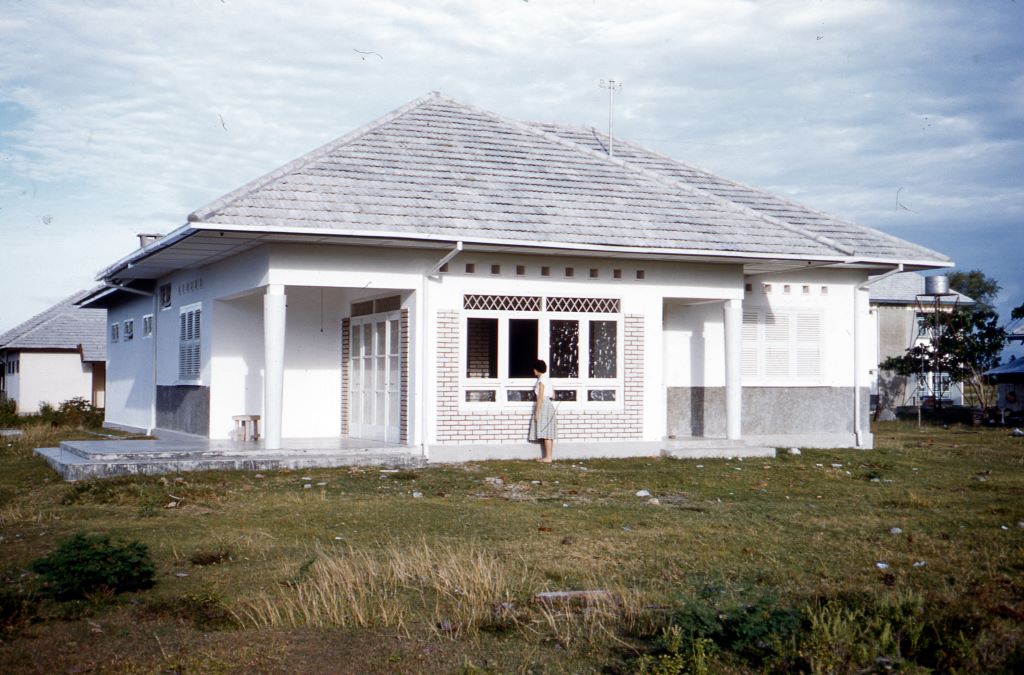
One of the houses was ours – a nice-looking concrete building with three bedrooms, one of which was used as a study, an open living area, a bathroom and a toilet. Outside the back door was the kitchen and three small rooms, designed to house our non-existent helpers. They led to the well.

The province was Aceh, right at the northern end of Sumatra. The capital was Kutaraja, now called Banda Aceh, and the university area was Darussalam (City of Peace). It was twelve years since the Dutch officially left and the new Republic of Indonesia was determined to concentrate on educating its citizens.

Our Indonesian language was very basic.  We had to learn fast. There were no other native English speakers around, although the next-door neighbour’s wife, Kerrie, who originated from Surinam in South America, spoke excellent English.

The university owned two cars and at least one of these was driven to Kutaraja on most days. You could accompany the driver if you needed to go but this would take up a good proportion of the day. Our option was to leave a basket with a small list and money, hanging on a hook for the driver to collect. He was quite capable of walking past and ignoring it!

The first essential was food. After a few days of rice, tomato and an egg we knew we had to do some speedy learning. Four or five recipes were added to our repertoire. Every recipe contained spices, and these had to be ground between a flat stone and one shaped like a rolling pin. Most recipes also contained coconut milk, so coconuts had to be split, the contents grated out and squeezed in water.

We had a small kerosene stove but electricity only between six and ten p.m. so no refrigerator. Fortunately, the spices kept the meat from deteriorating overnight, considering how long it took to make each dish. We had the same meal midday and evening two days running. Rice, however, an essential to each meal, would not keep and had to be cooked each day. To save a considerable time each morning, we made bread every few days and had it for breakfast.

Outside the house was our well, our only water supply. There was a pump on the well to fill the tank of water in the bathroom. However, it turned out that this leaked through the wall into the kitchen, so we decided to bathe at the well. Fortunately, there was a partial wall around it, as the only fences shielding us from the neighbour’s gaze were made of barbed wire. Buckets of water had to be carried to the kitchen and toilet and stored there. Washing was in a bucket by the well.

So many stories in the next two years, including the birth of our first child, but that’s where it all began.
​ 

Carmyl Winkler
August 2024
0 Comments

'My Special Project'

14/7/2024

0 Comments

 
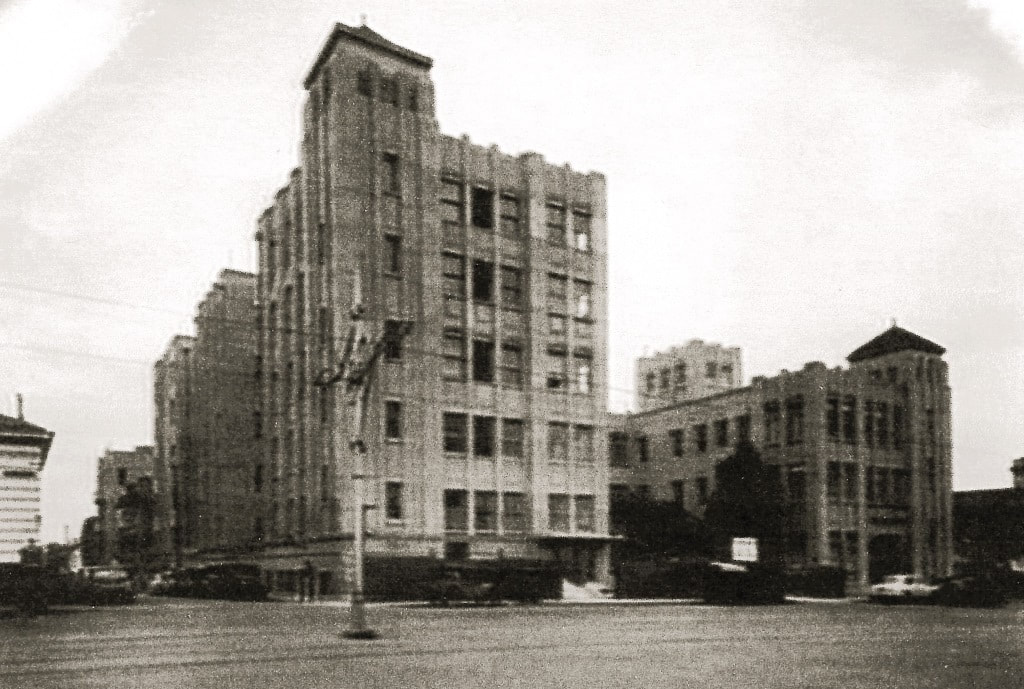
​It was 1957 and atomic weapons tests were being carried out at Maralinga in Central Australia. The fact that the effects of radio-active fallout were not well known was shown by the instruction to those on the ground to turn their backs when the explosion occurred. The presence of Aboriginal people living in the surrounding area appeared to be ignored.

At that time, Peter MacCallum Clinic had an energetic Scotsman as head of the Physics Department. He was concerned at the possible fallout from the Maralinga tests, as strontium-90 was one of the by-products of atomic fission. It is sufficiently similar to calcium that any residual strontium can lodge in bones and possibly cause bone cancer. For Dr. Martin, that was enough data to make testing for fallout, even as far away as Melbourne, an appropriate project for a cancer clinic.
Picture
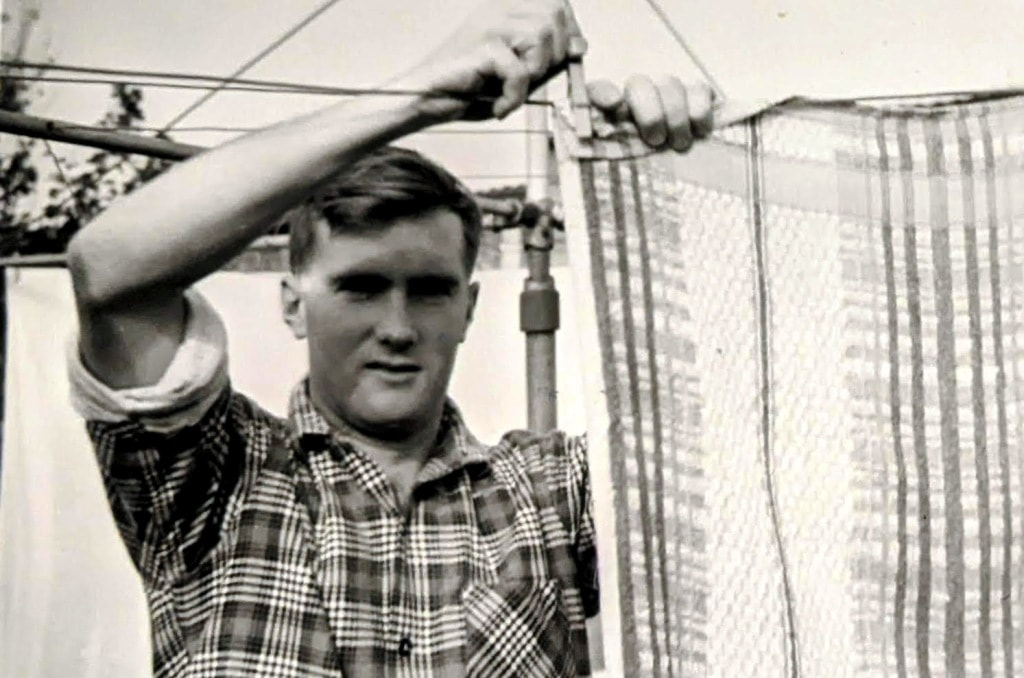
​He entrusted the carrying out of the weekly aspects of the project to me, the most junior of the five physicists and in my first year.

The workshop men at Peter Mac constructed a revolving arm on a four-legged stand and this was placed on the rooftop of the Little Lonsdale Street building. Cheesecloth ‘sails’ were clipped to the arm. A month or two later, a water collection was organized.

Each week, the cheesecloth needed to be replaced and the rainwater collected.  This required going up in a lift three or four floors, a short set of stairs, out onto the roof and up a small ladder. No wonder I’d been given the job!
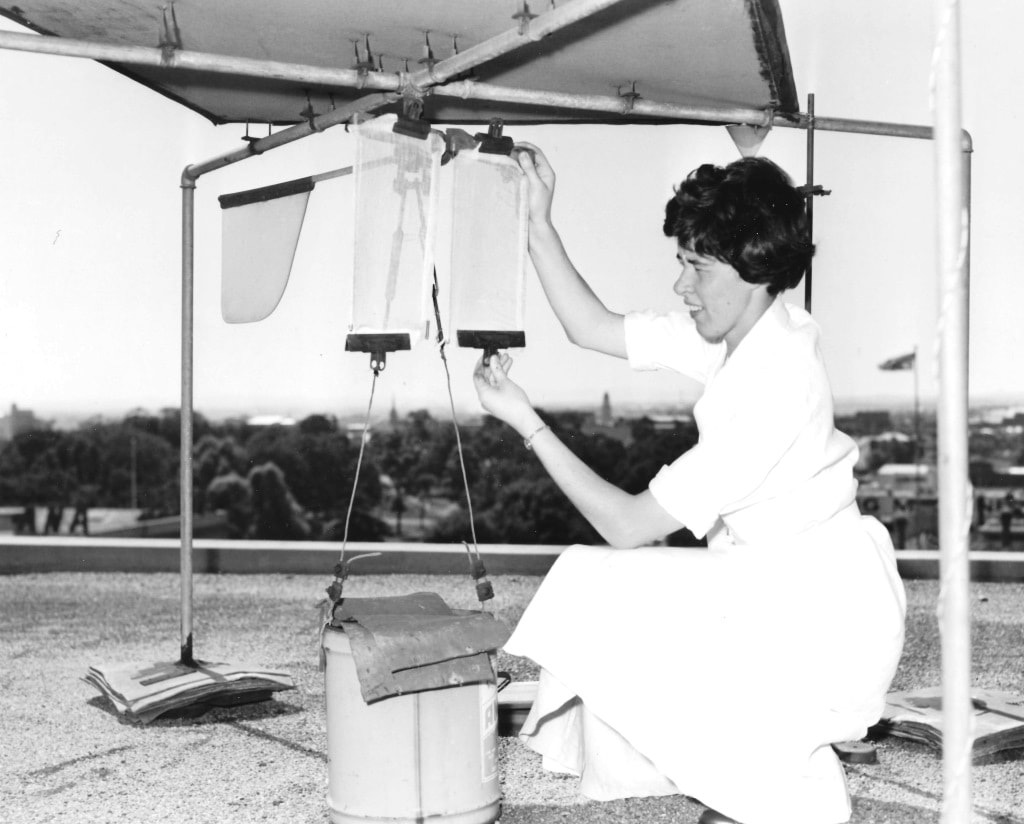
Picture
The cheesecloth and water were taken back to the lab where the cheesecloth was burned, the water evaporated and wiped out and burned and any radiation from the two sets of ashes was measured by a Geiger Counter and recorded. These weekly readings were taken for about eighteen months.

The results were significant. The background count for rainwater was 6 counts/minute. On the week ending 24th. October 1957, the measurement was 600 counts/minute. These peaks occurred two or three times, each time being about a fortnight after a test.
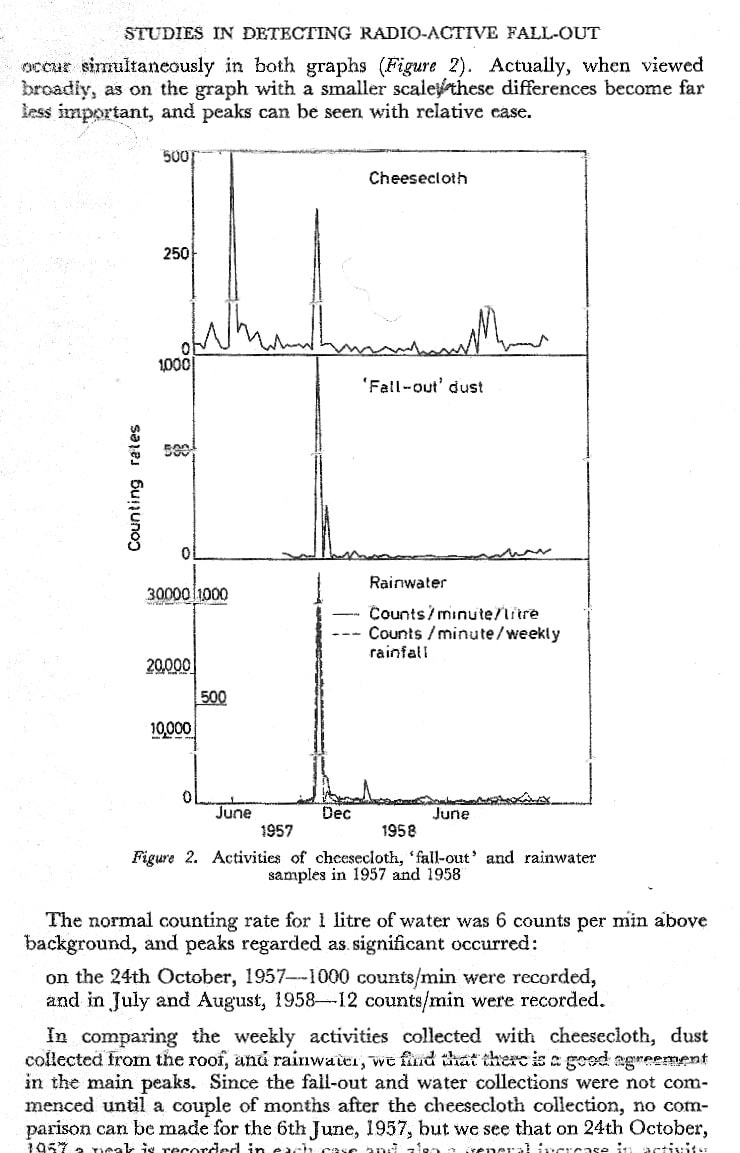
Picture
Dr. Martin invited me to give a paper on this project at a Radiation Biology conference. An interesting experience to be speaking in the Public Lecture Theatre at Melbourne University when I’d been a student there only two years before! There were a couple of questions at the end from prominent people but our case was pretty water-tight.

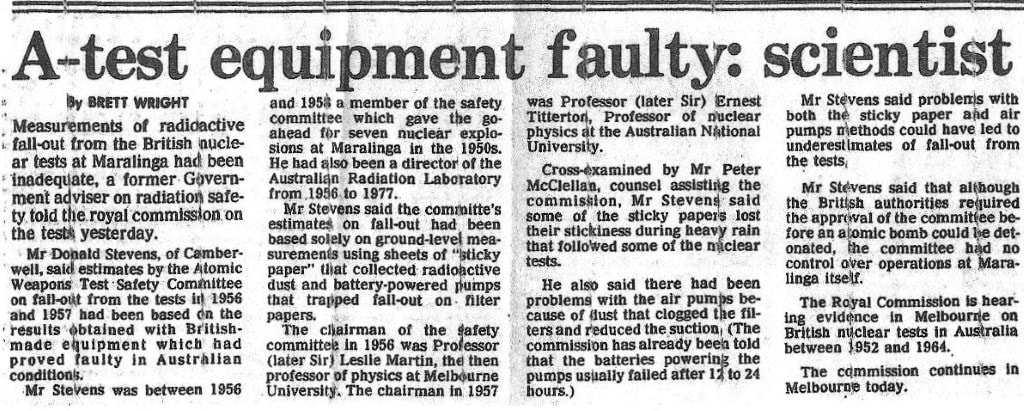
Twenty seven years later in 1984, an article appeared in ‘The Age’, headed

‘A-test equipment faulty’. 

​​
‘A former government advisor said that measurements of radio-active fallout at Maralinga had been inadequate. The fallout estimation had been based solely on ground level measurement using sheets of ‘sticky paper’ that collected radio-active dust and battery-powered pumps that trapped fallout in filter papers.​
Picture
'The Age', Tuesday 6 November, 1984
The cross-examination revealed some of the papers lost their stickiness due to heavy rain and the air pump became clogged with dust. The batteries also usually failed after 12 to 24 hours.

These could have led to underestimation of fallout from the tests.’

I had a smile.
​
 
Carmyl Winkler
July 2024
0 Comments

'My Brilliant Career as Mrs. Hinchcliffe'

9/6/2024

0 Comments

 
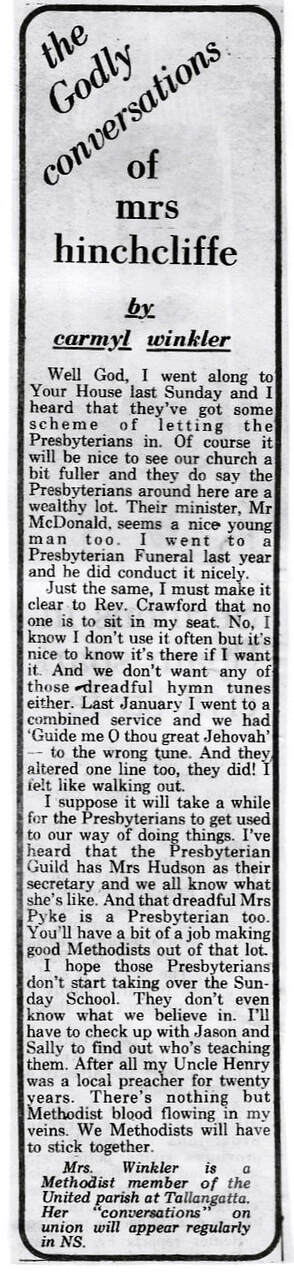
In 1975 and 1977, I wrote a series of articles called ‘The Godly Conversations of Mrs. Hinchcliffe’ for the Victorian – Tasmanian Methodist, then Uniting Church, paper.

The planned union of Methodist, Presbyterian and Congregational churches produced dissension in some and fear in others. Mrs. Hinchcliffe, the character I created, was among the latter.

She took her worries to God...

‘Well God, I went along to Your House last Sunday and I heard that they’ve got some scheme of letting the Presbyterians in. Of course it will be nice to see our church a bit fuller and they do say the Presbyterians round here are a wealthy lot. Their minister seems a nice young man.

Just the same, I must make it clear to Rev. Crawford that no one is to sit in my seat. I know I don’t use it often but it’s nice to know it’s there if I need it.

I hope those Presbyterians don’t take over our Sunday School. They don’t even know what we believe in. There’s nothing but Methodist blood flowing in my veins. We Methodists will have to stick together.’
​

At first Mrs. Hinchcliffe worried that some of the Presbyterians were not very nice people. Then it turned out there was a suggestion that the money from the Methodist Church fair was to go to the Freedom From Hunger campaign rather than for new heaters in the Methodist church. She had even heard rumours that this was because the Methodist church might be closed and everyone would have to go to the Presbyterian building.

In 1977, her worst fears were realized. Church union came about. Her church was now to be called the Uniting Church. A new hymn book was produced which no longer had some of her favourites among the mere 600 on offer.

Then it turned out that the Methodist minister was moving and the Presbyterian man was taking over. What’s more, his wife had a job, working in the High School library! How could she possibly do that and also complete the tasks as a minister’s wife, answering the phone, being president of the Ladies’ Guild and so on?

On top of all that the church service was no longer to be at the sacred hour of 11 a.m. but had been changed to 9.30!

‘Well God – just as I’d predicted! No more 11 a.m. services. I just hope you’ll be listening at 9.30 because the prayers won’t be rising at the hallowed hour they’ve been rising at for a hundred years from this part of the world.

Not only that but I went along to the 9.30 last week. I’d thought of staying home as a mark of protest but then I thought – where would the Methodist element be if we all did that? So I went along.

Well you wouldn’t recognize the service. Talk about modern! We have the round church – my word it’s hard to find a back seat. You can’t even work out which is the back seat.

Hats are out, not to mention gloves. And a young fellow in jeans took up the collection! I find them using one of those modern translations of the Bible. I said to the Rev. McDonald, “What was good enough for St. Paul is good enough for me.”  I don’t know whether that will change his ideas on the Holy Scriptures.

I hope you’re keeping up with the times, God.’
--
Picture
New Spectator, 1975
Carmyl Winkler 
​June 2024
0 Comments

'Time Travelling'

14/5/2024

0 Comments

 
 '‘When you look behind you, you see the future in your footprints*’ 
From family folklore, I had a mind of my own very early. This became obvious when I found myself between a very adept older sister and a very cute, well-behaved younger sister. I needed to be noticed. I trust I have softened my stance since then, despite still feeling the need to make my opinions known.

Second-hand clothes made up most of my wardrobe when young, so I was happy  to make my own clothes as the years went by. At no time in my life have I been a doyen of fashion.

‘Junior Age’ printed children’s writing on Thursdays and, as far as I remember, there was sometimes a ninepence reward. I haven’t stopped writing! Articles for Women’s Network and Grassroots magazines, various church papers and magazines, the odd book, and finally ‘As time goes by’. There have been a few ninepences along the way but mostly just a sharing of my thoughts.

My final year at High School and also while at university consisted of a class room of boys with a few girls and, hence, I found it easy to have both male and female friends along the way – from walking up the Belmont hill with Bill Grosvenor to having a cup of coffee with Graham Jensen.

Growing up, we were encouraged to be reasonably independent in our choice of interests and in the fulfilment of them. Despite Hobart, Ballarat and Geelong being home while I was growing up, and seven years in Melbourne studying and working, I was happy to be a small-town girl from then on.

This involved the challenge of finding friends, group activities and, later on, some paid work.  If these things were not already available in the small town we were currently living in, the option was to initiate something yourself. This resulted in a Brownie Pack, a Hello Group, a singing group, a multi-cultural group and some Indonesian teaching resources.

The footprints are indeed an indication of the person I became.

And when I remember the footprints of our children and now look at their present lives, I can certainly see the correlation and am delighted to do so.


Carmyl Winkler
May 2024
*Topic suggested by Graham Jensen
0 Comments

Memoir Review - 'Education of a Princess'

14/5/2024

0 Comments

 
'Education of a Princess' A memoir by Marie, Grand Duchess of Russia 1931

What a story!

Marie was born in 1890. ‘I am told my public entrance into the world was made in a golden coach drawn by three pairs of white horses. The coach was surrounded with mounted hussars in scarlet uniform. I was on my way to the Winter Palace for my christening.
​
A year later, Marie’s mother died giving birth to her brother Dmitri, who became her closest friend for the next 26 years. She grew up with two English nannies and various tutors. Her father remarried when she was twelve but, because he had married a commoner, he was not allowed to live in Russia. Marie and Dmitri went to live with their uncle. Each year they travelled around visiting the Emperor, their grandmother and an aunt who was a nun.
​
In 1904 war with Japan was declared. At first, the war was taken lightly but as months passed without Russia achieving a single victory, the war became unpopular. Marie’s uncle was against the political position of the government and they found their lives in danger. Not long after, her uncle was assassinated.

Their aunt was not nearly as kindly disposed towards the two young people and organized a visit from a Swedish prince. The day after they had met, the aunt called 16-year-old Marie into her room, asked her what her impression of the prince had been. “Prince William came here to make your acquaintance. He likes you and wants to know whether you would consent to marry him.” Marie was shocked. In the end, she reluctantly agreed.

At her request, she waited until she was eighteen, married in Russia with the Emperor giving her away, and moved to Sweden. She had diligently learned Swedish but could never lose her love for Russia. Marie and her husband had a baby son and travelled widely, but after five years, Marie could not remain in her present position. She returned to Russia without her son and the marriage was annulled.

Where was she to go from here?

Unbelievably, into a Red Cross uniform and in charge of a field hospital. The First World War had begun and Russian recruits surged forward – so many that there was not enough artillery for all the volunteers. Dmitri was already an army officer. Russia, with British and French allies, was fighting Germany.

For a couple of years, Marie found a new life. She knew nothing about ordinary people, first aid only from her brief training, but she was determined to learn. Amazingly, she describes this time as the happiest in her life.

However, time passed, troops became dissatisfied, Rasputin had wormed his way into the life of the Empress and there was much unrest, much of it due to the politics of the same Rasputin. Word came that he had been murdered. Two young men had believed that was the only way to deal with the turmoil. Dmitri was one of them. He was banished from his country.

But things didn’t quieten down. From then on, Marie was fleeing from one place to another. She was no longer safe in the hospital, the upper classes were being killed and the revolution took over.

Marie remarried and she and her husband eventually left Russia, again leaving a little son behind with grandparents. The bravery and the quick-wittedness of Marie, her husband and brother-in-law enabled them finally to get, via Ukraine and Odessa, on a ship to Roumania.

I was impressed by this book because of the honesty of the account of a life which had very few satisfying episodes. Marie’s closeness to her brother was her anchor. Even after she married, he visited Sweden regularly, as did he in the field hospital. His banishment after the death of Rasputin, happened in the midst of utter turmoil.

To be able to write this book fifteen years after escaping Russia was a fine achievement.


Carmyl Winkler
May 2024
0 Comments

'Scars'

14/4/2024

0 Comments

 
Picture
​Sandy Beach has had a mention in a previous memoir as I remember. The complete commercial picture was a small grocery with post office, a baker’s shop and a lolly shop. It certainly didn’t include a pharmacy – or a doctor for that matter.

So when I cut my leg climbing about on the galvanized fence and the cut became infected, my mother had to send for help further afield. Mr. Swain lived over the road and drove his sleek green bus to Launceston and back, about fifty km. each way, every week day. Mother explained the situation and asked him to buy a particular ointment to treat the cut. By the time Mr. Swain had dropped his passengers and arrived at the pharmacy, he’d forgotten the name of the ointment. However, he passed on what had happened and the chemist sold him something he thought would be appropriate.

It turned out that not only did the ointment fail to heal the leg but it started eating into the flesh. Needless to say, that particular treatment came to an abrupt end and an order was put in for the original ointment. Mr. Swain made sure he got it right this time and brought it over as soon as he finished his run. It did indeed heal the leg, but I can still dimly see the scar on my calf eighty years later.

From Sandy Beach, we moved to Ballarat and I was off to Pleasant Street State School. In those days, if students didn’t pass their exams, they were left down to repeat the year. Barbara was fourteen in Grade 6 and much bigger than we eleven-year-olds. She was giving me a piggy-back one playtime and she set me down on a small post supporting the netball goal post. This had a large bolt poking out three or four inches. As I jumped down, this bolt tore a large piece of flesh in my thigh and left it hanging on three sides. Poor Barbara was horrified but, of course, it wasn’t her fault.

The thigh had gone completely numb – possibly some of the nerves were severed – so I couldn’t feel any pain but, as I recall, the office lady fainted at the sight.

Off to Ballarat Hospital to get a multitude of stitches and a piece of sticking plaster about five inches wide to cover the wound. I was off school for six weeks and recommended to stay off my leg.

I had regular check-ups at the hospital and these entailed dragging off the giant sticking plaster each time. It was agony. However, one of the nurses had a wonderful idea. She cut the plaster down the centre,  turned back the edges and threaded a lace through cuts in the fold. From then on, it was just a matter of loosening the lace each time a check-up was needed. I loved that nurse!

One time Mother and I went to the hospital in a taxi as the car was unavailable. It cost so much we had to return in the tram and I had to walk the longish block from the tram stop to our place, much to Mother’s concern.

However the wound healed and the scar remained.

Much more interesting than a tattoo!

​
Carmyl Winkler
April 2024

0 Comments

'Her Story'

10/3/2024

0 Comments

 
​A ‘Doctor Book’, written in the 1800s proclaims consumption, tubercular and bronchial, as ‘the greatest disease of the world and increasing with the advancement of civilization’. In comparison, cancer receives only a brief mention although it did say breast cancer is ‘mainly confined to unmarried women’.

Consumption was still very much feared in the early 1900s when Florence was a little girl. Her mother, Carrie, was a nurse and died of consumption at the age of thirty-nine leaving four children, Ena eight, Hazel seven, Florence six and Russell aged four.
Picture
​Carrie’s husband, George, found a housekeeper for the children and married her as was the custom of the time. Two more children were born, Valma and John. Then when Florrie was thirteen, her father died leaving ‘Madre’ to bring up six children.

Florrie was a good student and planned to follow her mother into nursing but Madre insisted she leave school and get a job. She tried stenography but wanted something more creative and went into making hats. Ena was already working. Hazel was regarded as ‘delicate’ and stayed at home.

Colin McRae, a handsome young man at Echuca Methodist church had decided to move off the farm and study theology and was very attracted to Florrie. While away in Melbourne he wrote regular letters to her, some of which Hazel would open when they arrived ‘just in case he’s coming on today’s train’!

Colin and Florrie married in 1932 and travelled to Zeehan in Tasmania. Colin had never liked the name Florrie so decided to call her Beth, from her second name, Elizabeth. Hilly Zeehan with a yearly rainfall of 77 inches, was a huge contrast to flat, dry Echuca.
Picture
They left in 1934 with a three-week-old baby, to move to Beulah in Victoria, about to experience some years of drought.

Back to Tasmania to Hobart, now with two daughters. Four happy years and another daughter, before the move to Launceston. The war years coloured the memories here and life wasn’t easy. However they did bring a young son into the family.

After a brief break, a move back to Victoria and a revelation to the children that there were such people as cousins and they thought that their mother’s name was Auntie Florrie!

A final son was born in Ballarat.

Beth was my mother.

Despite the moving and little money, Beth loved being a ‘minister’s wife’. She spread her friendship far and wide and frequently had someone staying in the house, not overnight but for weeks or months.

We children flourished despite the moves and were given a reasonable measure of independence. Beth didn’t believe in smacking. Instead she sent the child to their bedroom and then came and gave them an ‘improving talk’. Most of us would have preferred the smack!

There were four more moves before retiring in Mooroopna,
Picture
​As each of us left home, we received weekly carbon-copied letters telling us the family news. The last one, finished on the morning she died, told us that she’d had a bit of heart trouble but got a good report from the doctor yesterday.

We had no phone so answered a succession of calls on the neighbour’s phone telling us she had gone to hospital, then that it seemed serious and then that she had died.

Colin, quite a reserved man, loved Beth dearly and they lived and worked together without apparent dissension. The death notice he wrote for the paper  finished with

‘So loved, so loving, so lovely.’


Carmyl Winkler
March 2024
0 Comments

I Was There - 'Sandy Beach 1945'

6/2/2024

0 Comments

 
​We were living in a Methodist parsonage in Launceston when Dad decided to enlist as a chaplain in the AIF, so we moved down the Tamar River 31 miles to Sandy Beach*.

Mr. Twomey had a grocery and post office and also organised milk delivery. My mother once found him out the back of the shop watering down the milk. Mr. Parry had a lolly shop on the highway a few doors away. I guess he sold something else, but I don’t know what it was. Mrs. Robinson had a baker’s shop a few doors in the other direction. These are the only shops I can remember but I guess there was a butcher.

There was a Methodist church with Mr. Fletcher at the helm, Mr. Swain with a sleek green bus that he drove to Launceston and back every day and the fish man who knocked at the back door each Friday with flathead for threepence each or flounders for sixpence. And that was Sandy Beach.

Beauty Point was a mile back with a big harbour, where we once saw a Catalina Flying Boat, and Beaconsfield was another three miles and that was where we went to school.

We had three girls, six, eight and ten, a younger brother who was three, our mother and Dulce who came with us from Launceston to give Mother a hand. Our house had an attic where some of us slept.
Picture
Dorothy was in the top grade, a mix of grades 6 and 7. Mr. Calloway, the headmaster, was the teacher and sometimes caned the boys. Frank O’Toole could sing the first verse of Lilli Marlene in German, exciting admiration and suspicion. We learned to sing Land of Hope and Glory and Beautiful Dreamer.

I was in Grade 4 / 5 with the lovely Miss Dawes for my teacher. An inspector turned up one day and asked the class, “If an electric train is travelling at 60 miles an hour and the wind is blowing in the opposite direction at 40 miles an hour, which way will the smoke go?” Why do I remember? Of course, because I was the only one who said electric trains don’t have any smoke.

We made our own fun with Dorothy writing plays about Cavaliers and Roundheads and we girls dressing up and acting them out for Dulce, Mother and John. We read ‘The Ant and the Grasshopper’ to kind-hearted John so we could see his eyes filling with tears when the ant turned away the hungry grasshopper.
Picture
​One morning we were on the school bus and people were on the road shouting, “The war’s over! The war’s over!” We kept driving to school where we had a short ceremony and then got the bus home. Two days holiday! Mother organised us and we went to Launceston in Mr. Swain’s bus and stayed there overnight. There were heaps of people in the city streets dancing and shouting. I’m sure Mother wanted to give us an experience to remember and she surely did.
 

​Carmyl Winkler
February 2024

*Now known as Ilfraville
0 Comments

'One Moment, This Year'

12/11/2023

0 Comments

 
I am reluctant to write about this moment but, quite honestly, it’s the moment that immediately stands out for me. Perhaps my other moments weren’t quite as dramatic.

I know just when this happened as I was on my way to Brain Games – about 1.45 on the fourth Tuesday of September. I was only a few minutes from home, part way down the path leading to Jaycee Island. The path has been patched a good deal so is not entirely level but it’s a path that I’ve walked along most weeks in the last two years. Maybe I was looking for birds. Whatever the reason, I fell over, flat on my face.

If this has ever happened to you, you will be aware that, as you are falling, you know exactly what is happening but you can’t do anything about it.

I lay there for a minute wondering whether I could get back on my feet. When I did manage to, I dabbed my face with a tissue, finding it immediately covered in blood. I wasn’t too sure which part of my face was responsible for the flow, but slowly made my way back up the path and across the street.

There, standing by her car, was an angel disguised as a kindly middle-aged woman. I’d never seen her before but she appeared to live around the corner from me, just two doors away. She called to me, opened up the back of her car and proceeded to get antiseptics, dressings, cleansing agents, forceps, from a large first aid kit. She told me she was associated with Cooinda. I couldn’t have been more grateful. I didn’t feel like taking myself to the clinic at that stage and thankfully walked around the corner home.

I went to see the doctor the next day and yes, I had skin off my forehead, my nose, above my mouth and two black eyes coming into view. I later found a bruised knee and a skun hand. I wore sun glasses for a day or two and then put up with the sympathetic comments. Incidentally, I discovered that it’s much better to say ‘I tripped over’ or even ‘I fell over’ than to say ‘I had a fall’.

Results:

1. I suddenly felt tremendously vulnerable. I immediately pictured a walking stick, then a walking trolley, then a motorised vehicle. My mind raced ahead with more and bigger ideas.

2. The next day, I left a Thank You card under the windscreen wipers of the grey car around the corner. I live in a court and know every person and, frequently, their visitors and relations. This is hard to believe, but in the two and a half years I have lived in my house, the grey car is almost always in the driveway but I have never seen Tess before or since.

How can I not believe in God’s care!

(No photos available!)

Carmyl Winkler
10:06 am  1 November 2023

Postscript -
​
12.24pm 1 November 2023..."Hi...I had a sudden thought this morning. I just printed out my story and I’m going around the corner to put it under Tess’s windscreen wiper!  Carmyl"

0 Comments

'Right Here, Right Now'

16/10/2023

0 Comments

 
​This is not so much a memoir as a confession. Few days would go past without me reminding myself to be aware of Right here, Right now.

I find it so easy to be planning what I need to do for the rest of the day – or tomorrow. I don’t seem to include what I want to do, just need. It’s very easy when you live by yourself to be eating a meal you’ve just prepared and finding your thoughts wandering off to something that happened today or, more frequently, might be on the agenda for tomorrow, instead of, ‘Wow! This is delicious!’

This sort of attitude immediately leads to the making of lists. Yes, my kitchen bench is never without a list for the day (and often the beginning of tomorrow’s list as well). I keep a small pad and pencil by my bed and occasionally, in exasperation, jot down in the complete dark, some idea I can pursue in the future so I will stop thinking about it.

Our sons frequently used to make CDs, singing songs about the idiosyncrasies of their parents (and sometimes those of the neighbours, in which case we played it very softly). So of course there was a song about Carmyl making lists – there might be an erupting volcano outside the door but Carmyl would still be at the bench making a list.

And I suppose one of the problems of list-making is that if you manage to get seven out of the eight items accomplished for the day, you feel a tinge of failure that number eight is not crossed out and will have to be transferred to tomorrow’s list.

Magda Szubanski headed a National Health Check series on TV last year which included a program running in Mansfield to give people healthier lives. One of the three things they suggested to do each day was to go for a walk around the block and listen. Put away each time you think of something you did yesterday or have to plan for today, and just listen. We think of past and future for 85% of the time and only 15% about what is happening here and now.

Last week I came across a quote from the Dalai Lama on Facebook.

‘There are only two days in the year when nothing can be done. One is called yesterday and the other is called tomorrow, so today is the right time to love, believe and mostly live.’

I’d better put it on the frig!    
Carmyl Winkler
​October 2023

Here are the words to 'She'll Make a List'

She’ll make a list…”

 
When the final trump shall sound, when the judgement’s all around,
When what was written in Revelation is writ large in every nation,
When the world is covered in haze and we’ve reached the end of days,
Carmyl will pause and make a list.

She’ll make a list, she’ll make a list, she’ll grab a scrap of paper get a biro in her fist,
When the final trump shall sound, loud enough to shake the ground,
Carmyl will be there making a list.

 
When the lookout turns volcanic and the town begins to panic,
As the town sinks beneath a pile of lava,
Tallangatta is the new Vesuvius and although I have no proof of this,
I think I know what tactic Mum would rather...

She’ll make a list, she’ll make a list, she’ll grab a scrap of paper get a biro in her fist,
When the final trump shall sound, loud enough to shake the ground,
Carmyl will be there making a list!
 
When a freak Hume weir tsunami wipes out half the Bandiana army,
As the tidal waves come surging from the west,
While the folks will all aspire to find some ground that’s higher,
Carmyl will go to the bench and do what she does best

She’ll make a list, she’ll make a list, she’ll grab a scrap of paper get a biro in her fist,
When the final trump shall sound, loud enough to shake the ground,
Carmyl will be there making a list!

Reprise..  (‘One more time…’)
​

She’ll make a list, she’ll make a list, she’ll grab a scrap of paper get a biro in her fist,
When the final trump shall sound, loud enough to shake the ground,
Carmyl will be there, (…will be there… ) making a list!...
Carmyl will be there … making (… making ..a) …a ….list!

Courtesy of Carmyl and the Winkler Brothers!

Postscript - "She’ll make a list” was sung by brothers Michael, Stephen and Tim Winkler, at a celebration for Carmyl’s birthday some years ago.  Lyrics, Michael Winkler.  Music –verses fit Gilbert and Sullivan’s ’I am the very model of a very modern Major General’ while the refrain is reminiscent of toe tapping Dixieland Jazz. (Cassette recording was played to accompany Carmyl’s story ‘Right Here, Right Now’, at U3A in October 2023)   
'She'll Make a List' - Lyrics (Download PDF)

0 Comments

​The Slow Moving Adventure

16/9/2023

0 Comments

 
​I’d left work in February 1961 and we’d moved our belongings to obliging in-laws. They graciously took us in for a few weeks. But that’s not the way things work in Indonesia.

We were on our way to work as volunteer graduates to replace Dutch public servants until Indonesians graduated and took over. The scheme had been running for about eleven years. Our proposed place of work changed several times in the next three months but eventually we were off to Aceh in the far north of Sumatra.

We boarded a Norwegian passenger-cargo ship in Melbourne on 26th. May. First stop Sydney for a couple of days, then Brisbane, a one day stop in Makassar, then a night or two in Surabaya, finally hitting Jakarta on June 17. During this time flour and Holden cars were being loaded and unloaded at various stops. The passenger list numbered four, us and two men headed for Malaya. The captain’s Australian wife was making the trip so it was good to have another female on board.

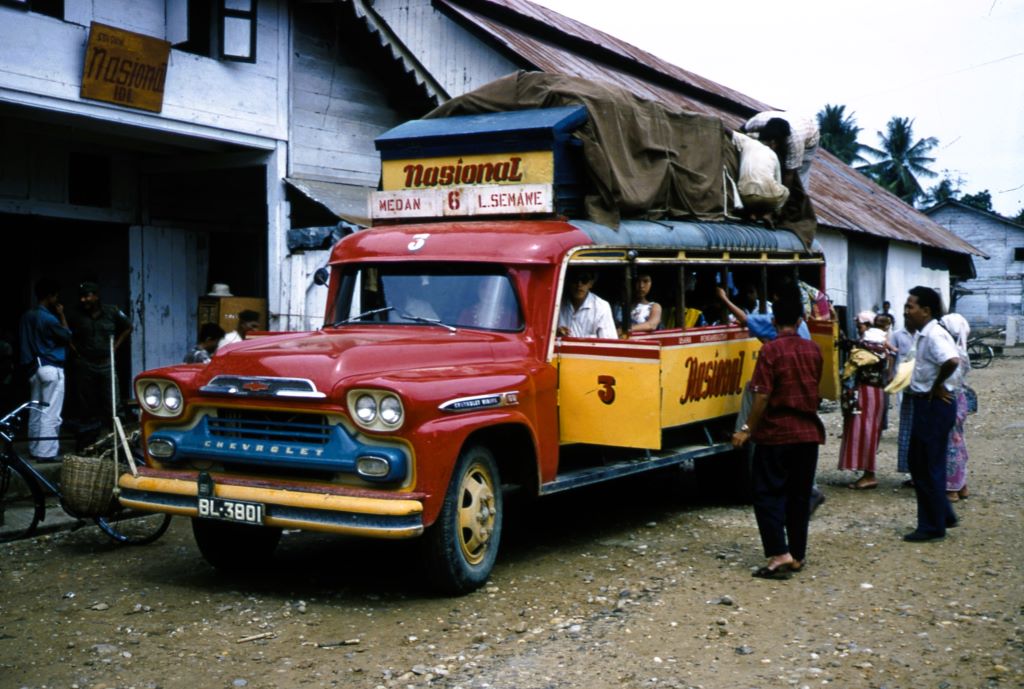
Other volunteer graduates awaited us in Jakarta. Our Indonesian language was extremely basic but the morning after we arrived, we eagerly took a bus into the city centre to find the office that was to organise our travel to Aceh. We found the office but our man wasn’t in. Days went by. We did eventually find our man who told us his department didn’t have the money so try another office. We got to know Jakarta buses and markets quite well. After a month we managed to get plane tickets and we were off to Medan – not quite Aceh but a good start.

After the very basic hostel in Jakarta, the accommodation in Medan was a step in the right direction. We met a few Australians and found that a university lecturer from Aceh (who turned out to be our future neighbour) was also trying to get home so we handed our responsibilities to him. We had several days of ‘Plane’, ‘Bus’, ‘Maybe plane’, ‘No, only bus available’ and after a happy eleven days in Medan, we boarded the bus for a three day trip.
Picture
Bus from Medan to Kutaraja 1961
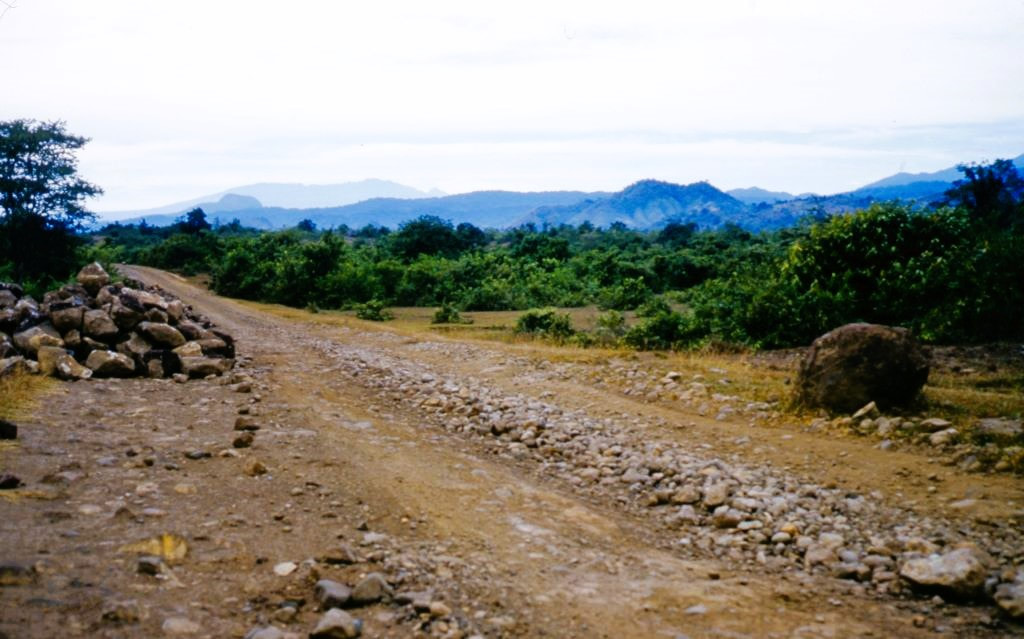
​The bus seats went right across the width of the bus so the way to get on was frequently to climb through the window at your row. I’m trying to remember whether we actually did this but I think the answer is Yes. Much of the road was in very poor condition and there was the odd bridge missing.
Picture
The 3-day road from Medan to Aceh
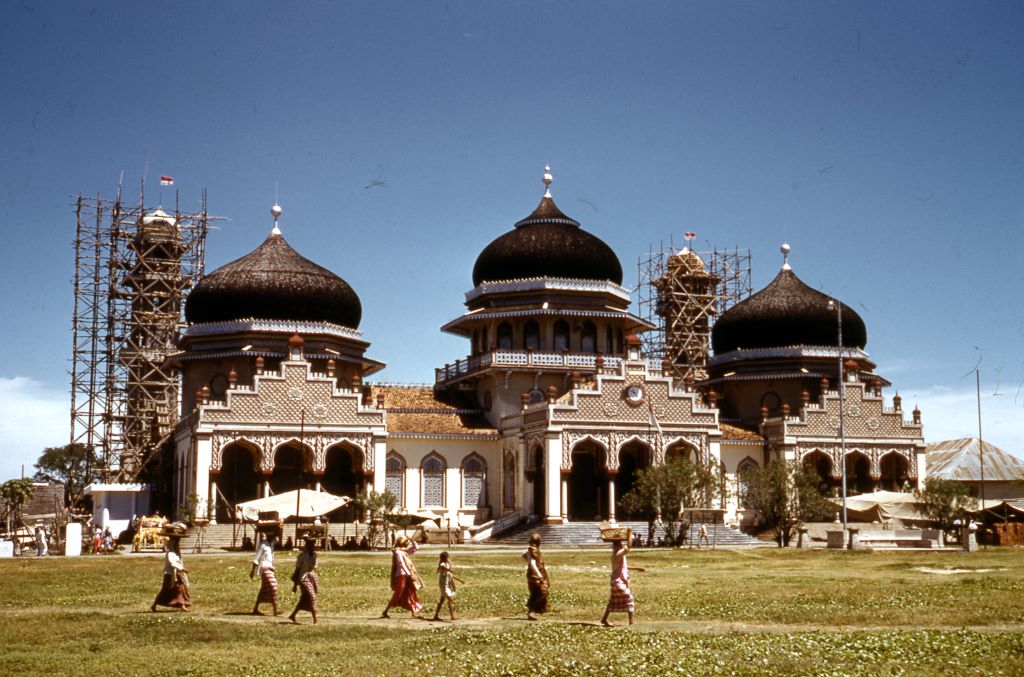
Varying accommodation was provided for our two overnight stops and we did eventually reach Kutaraja, the capital of Aceh. 
Picture
Mosque, Kutaraja
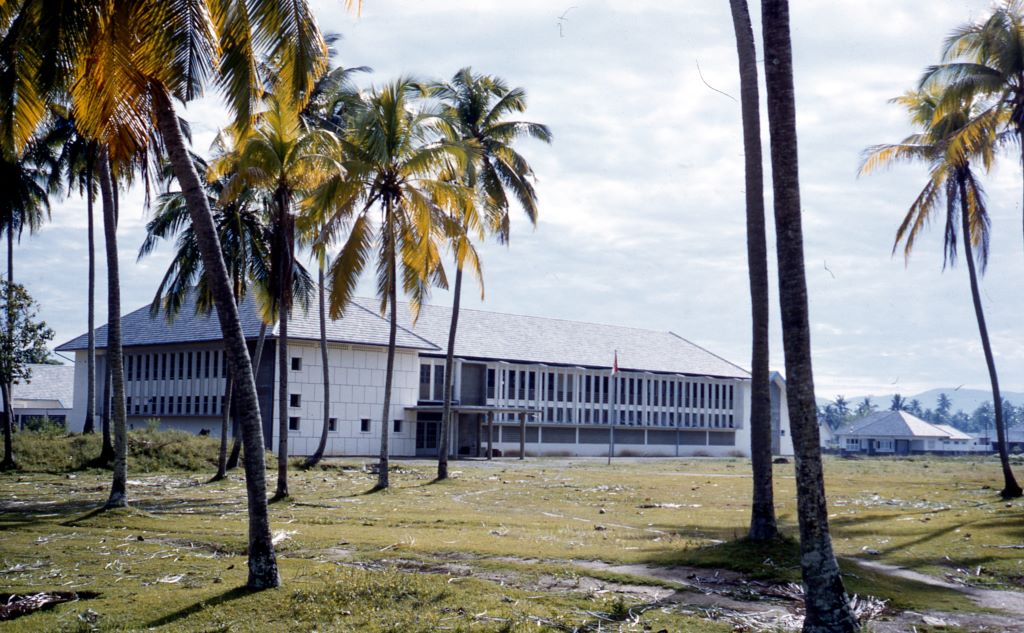
​Almost there but not quite, as the new university, along with the lecturers’ houses, was being built in the middle of rice fields several km. out of the capital.
Picture
Facultas Ekonomi (our house over the road)
Before long, a car arrived to take us to Darussalam and our new home at last. Well, no. Some army personnel had occupied the new house while it was empty and there were a number of repairs that had to be made. We were to live in the Mess next door until the house was ready. We actually moved in on August 21, just on three months after sailing out of Melbourne.
Picture
'Our House'
Carmyl Winkler
0 Comments

"What was that about 'Retirement'?

9/8/2023

0 Comments

 
I’ve never been presented with a gold watch to celebrate fifty years in the same job. In fact, I seem to have flitted hither and yon depending on where I’m living, how old my children are or what’s on offer.  My husband, Don, had retired from secondary teaching when he was asked to teach some Indonesian at the local primary school. It was a new initiative and he agreed to take it on if I would teach the younger classes.

At 56, this was a new experience for me, another for which I had no formal qualifications, so my class always included the class teacher. It turned out to be something I really loved.
No syllabus, few teaching materials – where to start? With singing of course. What better way to learn a new language?  On the first day of Preps. we sang a song with just five new words:

Good morning teacher,
Good morning all,
Good morning. Freedom! (or Independence!)


A somewhat quaint word to finish with but one still very dear to Indonesian  hearts.

There wasn’t any suitable source for songs so, just after a year, we made a tape of fourteen songs with singers from Grades1 to 3 and the help of visiting keyboarder, university student Stephen Winkler. A huge success all round. Hundreds of tapes were sold before we turned it into a CD.

A book was needed to suggest learning ideas, a number using songs from that tape. That sold out. Later a book of folk stories and related activities.

Easy conversation, numbers, colours, always games, while learning about  17,000 islands, 240 million people, weather, food, animals, clothing, religion, customs. Of course, this was spread over several years with new words accompanying each topic.
Picture
Picture
​At the end of each term we had a classroom concert with an invitation in Indonesian, songs, students showing their language skills and always finishing with a play based on an Indonesian folk story. Parents loved it as did the performers.
Picture
​
Meanwhile a number of other schools, mostly country, asked if Don and I could do a program - maybe six weeks – at their school. The last day of the program always consisted of having an Indonesian cooking day and finishing off with a concert.

Because the teaching materials produced became well known, I was invited to run some professional development days for teachers. Some were held in Tallangatta but others in a number of places including Benalla, Ballarat, Mildura and Canberra.

Keith Fletcher was the Language Coordinator for the Benalla region and ran an Indonesian video competition. That was our next challenge. There weren’t many schools competing but we won a number of times. The last video we made embraced the whole town with students visiting shops and other places saying Good Morning in Indonesian. That was great.
Picture
Since my first book had sold out long ago, I decided to use my twenty five years of experience to write one last book called ‘Making Indonesian Fun’. It was launched not long before I came to Benalla. I was 83 at the time.

I’ve realised that basically I’ve spent my life talking, singing and writing.

What was that about retirement?

What’s next on the list?
 
Carmyl Winkler
August 2023
0 Comments
<<Previous
    Our Stories

    Carmyl's stories

    Carmyl joined 'As Time Goes by' in 2022.  Carmyl's first story,  'I Was There', took us to Indonesia in the early 1960's.

    Picture

    Stories

    All
    'Aceh 1961'
    '(....) Adventure'
    'Advice'
    'A Long Lost Friend'
    'A Sense Of Place'
    'A Steep Learning Curve'
    'A Year That Changed Me'
    'Bronwyn'
    'Bucket List'
    'Causes' - The Multi-Cultural Program
    'Communicating'
    'Community'
    'Education Of A Princess'
    'Emergence'
    'Failure'
    'First Of April'
    'Footprints'
    'Friends'
    'Her Story'
    'How Can I Keep From Singing?'
    'I Changed My Mind'
    'Indonesia'
    'I Was There'
    Memoir Review
    'Memories Treasure Chest'
    'My Brilliant Career As Mrs Hinchcliffe'
    'My First ...(Boyfriend)'
    'My Happy Place'
    'My Special Project'
    'One Moment
    One-moment-this-year
    'Reflecting On COVID'
    'Retirement'
    'Right Here
    Right Now'
    'Sandy Beach 1945'
    'Scars'
    'Shaped By Childhood'
    'She'll Make A List'
    'Sixty-three Years Ago'
    'Someone Who Shaped Me'
    'The Trigger'
    'The Winter Cut Came To Visit'
    'This (Reading) Life'
    This Year'
    This Year' (2023)
    'Time Travelling'
    'Trees'

    Archives

    November 2025
    October 2025
    September 2025
    August 2025
    July 2025
    June 2025
    May 2025
    April 2025
    March 2025
    January 2025
    November 2024
    October 2024
    September 2024
    August 2024
    July 2024
    June 2024
    May 2024
    April 2024
    March 2024
    February 2024
    November 2023
    October 2023
    September 2023
    August 2023
    July 2023
    June 2023
    May 2023
    March 2023
    February 2023
    November 2022
    October 2022
    August 2022
    July 2022
    June 2022
    May 2022
    April 2022
    March 2022
    February 2022

    RSS Feed

We acknowledge the traditional owners of the land on which we meet and pay our respects to their elders - past, present and emerging.
Picture
News
​Newsletter
Facebook Page
​
Program Suggestions
​CO-VID Safety

U3A Benalla Flier 2026 
Membership Application/Renewal
​
Semester 1 Program Guide 2026
Semester 1 Timetable with Dates 2026
Developed and maintained by members, this website showcases U3A Benalla 
​Photographs - U3A members; Benalla Art Gallery website; ​Weebly 'Free' images;Travel Victoria and State Library of Victoria