U3A Benalla
  • Home
  • Benalla
    • Benalla
    • Benalla District
    • Who, What and Where? - Benalla Rural City
  • About
    • Our U3A
    • President's Page
    • Executive Committee
    • Policies
    • Convenors >
      • Convenors
      • Convenors A - Z July 2025
    • Program Ideas
    • Newsletter
    • Website
  • Groups
    • Groups A - Z
    • Courses & Activities 2026
    • Recent and Past Groups
  • A - B
    • A-Ch
    • 'A Taste of Art'
    • American History
    • Apple Refresher Course
    • Art Appreciation
    • 'As Time Goes By'
    • Australian Shares and Stock Market
    • Be Connected - Android
    • Be Connected - Tech Advice
    • Birdwatching
    • Brain Games - Neurobics
  • C - E
    • Ch - E
    • Car Torque
    • Cards '500'
    • Chat n' Chew
    • Coin Collectors
    • Collectors
    • Community Singing
    • Creative Writing
    • Demystifying Psychology - Discussion Group
    • Easy Bushwalking
    • Exercises for Fun
    • Exploring the Universe
  • F-Pa
    • F- Pa
    • Family Research
    • Film Discussion
    • Garden Appreciation
    • Garden Team
    • German >
      • German Home
      • Lessons
    • Let's Talk Books
    • Mahjong
    • Meet and Mingle
    • Music Appreciation
    • Page Turners
    • Patchwork and Craft
  • Ph-W
    • Ph -W
    • Photography
    • Pickleball
    • Play Reading
    • Politics & Current Affairs
    • Recorder
    • Singing for Fun
    • Sustainability & Stock and Land
    • Tech Talks
    • Train Buffs
    • Ukes4Fun
    • Wine Appreciation
  • Join
    • Join Us
    • Membership Application/Renewal Form
    • Program Guide - Sem 2
    • Timetable with Dates Sem 2
    • Venues and Maps
  • News
    • December Newsletter
    • News Blog
    • 'What's On' Calendar 2025
    • Monthly Calendar
    • Website & Facebook
  • FB
  • Gallery
  • Links
    • Resources and References
    • U3A Network Victoria
    • Seniors Online Victoria
    • U3A Albury Wodonga
    • U3A Beechworth (Indigo U3A)
    • U3A Bright
    • U3A Goulburn Valley
    • U3A Murrundindee East
    • U3A Wangaratta
  • Contact

The Year That Changed Me - 1974

3/12/2015

0 Comments

 
In February 1974, in my early thirties, I married the god daughter of an Anglo American farmer and her English husband who had befriended me when I was an agricultural student in England a decade previously. 
 
That period in the early 1960s changed my life too.  Before I went there I had thought of England as being almost the same as Australia.  I had not been ready for England’s rigid class system and sophisticated cultural diversity.
 
Distinctly middle class in English eyes I was accepted though; I was just branded in a semi serious way as a “bloody colonial”.
 
The couple of swinging sixties years I spent in England really opened my eyes to the wider world.
 
But forward again to 1974.   Newly married, I was about to be exposed to city living or should I say suburban Burwood living in Melbourne. I’d previously not spent more than a week or two at a time living in a city and it was initially vaguely oppressive being more or less confined to a suburban block.
 
It wasn’t always though.  I’d borrowed a tractor from my parent’s farm at Benalla and because it was difficult to start, had parked it overnight on the steeply sloping drive of a neighbour - who had just coincidentally bought my parents’ old house near Benalla.
 
The new Burwood neighbour was so cross about the monster presence on what was soon to be his drive, that I don’t think he ever really spoke to us.
 
The really big change in 1974 was that within weeks of becoming a married man I landed a journalism job with Stock and Land newspaper in Melbourne.
 
I’d been offered the job the previous spring when we were selling our Mortlake Hereford stud and I had done the artwork for a half page advertisement to go in Stock and Land.
 
I had laid Letraset type (remember that miraculous stuff) over a photo I’d taken of the cattle and despite the fact I was told that my type was slightly crooked, the Stock and Land editor must have thought I had potential.
 
Anyway, in March 1974 I started writing about farming with an article about King Island which I had visited several times in 1973 to list farms for sale.
 
In the newsroom I did deal not so much with the editor as with a sub-editor and in my case it was two.  I very quickly got feed back on what I should be doing and so started a steep learning curve on how to make an impact with words.
 
I learnt that the essential shape of a story should be an inverted pyramid: the what, when, why, who at the very top, gradually tailing down to the less important stuff.  That means if a cut is made to a story, it will be from the bottom and only relatively unimportant material will disappear.
 
I had always been a keen photographer so complementing stories with pictures came to me pretty naturally.  It was nice to have someone else do all the developing and printing though.
 
It was the taking of pictures which started a row with a former employee of Stock & Land who had just left to represent The Land newspaper in Victoria.  I don’t know whether it precipitated his move, but he had reportedly had a very public punch up with the chief sub editor in the newsroom.
 
Anyway I was member of the Australian Journalists’ Association and as good union members, we were supposed to have photographers trail along with us rather than take our own pictures.  
 
However at an event at the National Science Centre this objectionable individual, who went on to run Rural Press out of Sydney,  started shouting at me from a mezzanine floor for taking pictures. 
 
I never forgave him and when Rural Press bought Stock & Land in 1986, I resigned and took a different road rather than have to work under his bossy and dishonest eye.
 
My career as a Stock and Land journalist had ended after twelve years,  but my life as a journalist has lasted for over four decades since it started in 1974 – the year that made me. 


David Palmer
16 November 2015
0 Comments

Stand up Comedy Set - 2015 (alternative ending)

23/11/2015

0 Comments

 
For years I wondered where one of my testicles had gone.  I mean I might have been born with just one, but I suspected I might have been fairly normal and have actually been allocated two.  I know some males have three but that is pretty unusual apparently.

Anyway,  I was a slow developer and in my mid teens I started to wonder why I only had one.  I continued wondering for the next half century or so largely because I was too embarrassed to ask my mother.

Not that the one I had didn't  work; I'd already fathered three children.

Anyway after having three children it became necessary to restrain the one I still had and I booked in to a Shepparton hospital to have a vasectomy.

With my farm background I knew it could be a pretty straightforward operation. If you had rams you didn't want to breed from, you picked up an instrument called a burrdizzo. Rather like the jaws of a modern rabbit or dog trap you close them across the scrotum and above the testicles to sever the sperm supply line as it were. However the skin is not affected.

Well, I thought my op might be as simple and as fast as that, but there was a standard procedure and it was a bit more complicated.

I thought that as only one testicle was involved, it was a bit rich charging the whole Medicare standard fee. Two thirds was all that was justified in my book.

To add insult to injury, when I came to drive home I found my car's battery was flat, a bit like me, and I had to push it to start it.
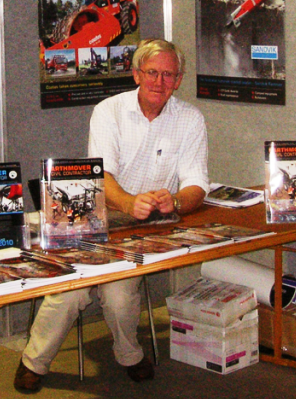
Eventually when I was in my seventies and my mother was in her nineties, I popped the question. It took so long to ask because I was very shy when I was young and it just took me a long time to get over it.  


According to my mother, who was very matter of fact about it, a country doctor in Victoria had removed my appendix when I was 13.  My mother said he had found the errant testicle--apparently it had not descended as it was supposed to and he had whipped it out with the appendix.

Reflecting back, I wonder that I never asked my mother earlier.  And I wonder that she never thought to tell me.

Thanks for being here!


David Palmer
0 Comments

A 'Stand Up' Comedy Set...

4/11/2015

0 Comments

 
For years I wondered where one of my testicles had gone.  I mean I might have been born with just one, but I suspected I might have been fairly normal and have actually been allocated two.  I know some males have three but that is pretty unusual apparently.

Anyway,  I was a slow developer and in my mid teens I started to wonder why I only had one.  I continued wondering for the next half century or so largely because I was too embarrassed to ask my mother.

Not that the one I had didn't  work; I'd already fathered three children.

Eventually when I was in my seventies and my mother was in her nineties, I popped the question. It took so long to ask because I was very shy when I was young and it just took me a long time to get over it.

According to my mother a country doctor in Victoria had removed my appendix when I was 13.  My mother said he had found the errant testicle--apparently it had not descended as it was supposed to and he had whipped it out with the appendix.

Anyway after having three children it became necessary to restrain the one I still had and I booked in to a Shepparton hospital to have a vasectomy.

With my farm background I knew it could be a pretty straightforward operation. If you had rams you didn't want to breed from, you picked up an instrument called a burrdizzo. Rather like the jaws of a modern rabbit or dog trap you close them across the scrotum and above the testicles to sever the sperm supply line as it were. However the skin is not affected.

Well, I thought my op might be as simple and as fast as that, but there was a standard procedure and it was a bit more complicated.

I thought that as only one testicle was involved, it was a bit rich charging the whole Medicare standard fee. Two thirds was all that was justified in my book.

To add insult to injury, when I came to drive home I found my car's battery was flat, a bit like me, and I had to push it to start it.

0 Comments

'A Test of Courage'  - 'Whistle blown on export fiasco'

26/10/2015

0 Comments

 
In 1965 my father, a breeder of pedigree Hereford cattle, decided to contribute a bull to a trade effort aimed at encouraging sales of Australian Herefords and Poll Herefords to Chile.So in July our bull joined a handful of other pedigree bulls and 750 commercial Hereford females in Sydney, to be shipped across the Pacific.
     
I was drafted to represent the Hereford Society on the voyage and on arrival in Santiago, to spend three months at that city's show ground,  preparing the stud animals and then showing and selling them at the capital's annual agricultural show. But that is another story and a successful one.

Not so the fate of the Hereford heifers.
    
There had been a moderately severe drought in many parts of Victoria and New South Wales which had made it difficult for Dalgety, the buying and shipping agency, to acquire the most suitable cattle to be exported.  In any event its agents bought in-calf heifers largely from New England, on the proviso that they would not calve until some months after they arrived in Chile.
   
The cattle, with considerable feed, were uneventfully loaded on the 7000 tonne Danish owned ship the Cimbria in Sydney. 
    
But we were only an hour or so outside Sydney when the engines stopped.  Then we heard the ship would have to be towed back.The engine had failed because it had been serviced in Sydney and the huge pistons had been chromed when they should not have been. So the cylinder heads came off and men with angle grinders worked for a week removing chrome.

The cattle remained on board and we again set sail, this time without stopping as we ploughed our way across the South Pacific.
    
But only a week or so after leaving Sydney, the heifers started calving and I and my two colleagues - one was Terry Ryan from Finley who now lives in Benalla - were hard pressed as we helped the many heifers having difficulties producing their first calves.  In rough weather it was quite an experience doing the All Creatures Great and Small arm inside the heifer where is the calf thing, while feeling miserably seasick.
   
While this was bad enough, the feed supplied, while from a reputable miller, was fairly liberally polluted by bale hooks, vicious barbed devices for holding wool bales closed.  The cattle ate these with the feed and they tended to lodge at the bottom of one of the stomachs which was very close to the heart. This caused quite a few deaths.

After three weeks we arrived in Concepcion and the commercial heifers and their calves were unloaded and held on a quarantine farm. Luckily our stud cattle went straight to the showground which was effectively their quarantine area.

Now foot and mouth disease was a problem in South America and the cattle had to be vaccinated.  But being patriotic Chlieans, the local vets would not use an excellent vaccine made by Coopers in Argentina. Instead they opted for what I was told was a live brew cooked up in Santiago backyards.  The end result was that many of the cattle died of foot and mouth while in quarantine; fortunately we were able to wangle some of the Cooper product for our 12 strong show team.

It was at this stage that I felt obliged to report what had been going on to the secretary of the Hereford Society, my boss.  I pulled no punches, so was horrified to find that the Society had reproduced my letter and mailed it to the several hundred members of the Society around Australia. I was then told by Mike Frost, the Chilean Dalgety representative that the second in charge of Dalgety Australia, was on his way to Chile and as the saying goes, wanted my guts for garters.  Fortunately for me my report had been accurate and I never heard a cross word from anyone in Dalgety.

The whole exercise was most unfortunate because it was funded by the United Nations to enable the Chileans to produce more beef. At the time it was illegal to eat beef for three days a week and we often ate horse meat instead.

Strangely enough, my brother the following year accompanied a shipment of Herefords to South Africa.  While in a taxi in Durban he was offered an Australian passport for a considerable sum.
​
He reported (blew the whistle) on the incident to the Australian embassy, demonstrating whistle blowing skills he continued to draw upon throughout a most adventurous working life! 


David Palmer
​October 2015
0 Comments

'Cringe'

19/10/2015

0 Comments

 
Trees and aeroplanes don’t mix
 
It was a summer day in the early 1980’s and I was working for Stock and Land Newspaper. 
 
The previous day I’d flown my immediate boss, his wife and teenage daughter, from Benalla to Bathurst to look at and do a story on some agricultural enterprise with Murray Grey cattle as the centre piece.  We’d refuelled at Bathurst to the extent that I filled the fuel tanks and we flew into a mountain top resort airstrip above Mittagong and about 1000 metres above sea level.
 
I can’t remember what we did there, but in the late afternoon we taxied to the far end of the not very long runway – I knew we were fairly heavy – stood on the breaks and opened the throttle.
 
Unfortunately, because the day was warm and the altitude high, the air was less dense than it would have been further down the mountain.  The aeroplane did not accelerate as nimbly as it should have done, although I had an inkling of the problem because of the weather before we took off.
 
I managed to lift the plane into the air, but then we sank through the top of a dead gum tree.
 
Fortunately, just beyond that the ground fell away sharply and we were able to pick up almost normal flying speed, although there were some serious indentations in the front of the wing.
 
At the same time, it was obvious that the tree had ruptured at least one of the wing fuel tanks because there was a stream of fuel in the airstream, in much the same fashion as war movies tend to show a troubled aeroplane.
 
I could have returned to the airstrip we had departed from, but because it would have been difficult to repair the damage, chose to fly on to Goulburn about 20 minutes flying to the west.  This decision was not helped by a teenager who seemed to be convinced we were doomed and screamed all the way to Goulburn.
 
Fortunately we were able to land safely, tie the aeroplane down, advise the Civil Aviation Authority and the Eildon owner of the aeroplane of the damage, hire a car and drive back to Benalla, where I bailed out and the other three proceeded to Melbourne.
 
Obviously it was very traumatic for all of us, but after doing the due reporting, I was quite keen to forget the whole thing.
 
Unfortunately  the Goulburn Newspaper picked up the story and a school friend of my cousin, who lives near there, sent him the cutting.  That meant the story was out in the wider family – which is where I hoped it would stop.
 
However, the following week I went to a Farm Writers and Broadcasters Society monthly meeting in Melbourne and there was my boss passing round photos of the damaged plane to an intrigued audience.  To give him his due he did look slightly embarrassed.  The cat was well and truly out of the bag.
 
Much later I wrote up the particulars of my stupidity for the Aviation Safety Digest (aka Crash Comics).  They were kind enough to publish with ‘Anonymous’ as the writer. 
​
 
David Palmer
October 2015

0 Comments

'A Snake Story'

9/10/2015

0 Comments


Berry was a Queensland farmer who loved snakes.  He was also a practical joker and one time he released a king brown in his local pub. That caused instant panic with one man exiting the bar through a closed window and another vaulting the bar and getting his foot caught in a beer tap with beer going everywhere.

A friend who worked on Berry's farm said it was quite usual when mustering cattle to see 20 snakes enjoying the Queensland heat.

A successful breeder of Hereford cattle, Berry did not allow anyone mustering his cattle to use horses, bikes or dogs to help the job along. That meant walking long distances around the farm bringing cattle together, so the musterers had a high risk of being bitten by snakes.

Not all were king browns or deadly taipans though.  Quite a few were more or less harmless pythons.  However my friend woke one morning to find a large python coiled round his neck, an experience he did not wish to repeat.

Berry was quite fearless around snakes and would pin down their heads with a forked stick while with his other hand he would grasp their tails and lift them into a sack. These captured snakes he would send to Brisbane where they were kept cosy for the rest of their lives and milked for their venom. The venom was used to make a vaccine to save the lives of people bitten by snakes.

Berry's wife Vera was also keen about and quite fearless where snakes were concerned.  She said it was silly to kill a snake, even when one was close to the homestead, because another snake would always take the place of the one you killed.

"It is much better to have an old snake staking its territory around your house and knowing your movements, than continually killing them and encouraging young and inexperienced snakes into your yard, which you were likely to tread on because they were not familiar with your movements."

Vera knew where all the nearby snakes lived and would even feed them dead mice.  Her favourite trick was to dangle a dead mouse by its tail about half a metre from a snake's hole in the ground.  She would not flinch when the snake came out, took in the situation, and struck at and grabbed the mouse.  Vera said there was no risk of being bitten because the snakes knew her as a friend and that was the way they always took their prey.

The only time Vera relocated snakes was when they started eating her chook's eggs.  Not that it was easy because they had a great sense of territory.  Sometimes she would move them up to 10 kilometres and they would nearly always come back!
Editor's note:   The brief here was to write something for children, such as a bed time story or fairy story.   David's 'Snake Story' is a vivid example of a reminiscence based story for a primary school age child curious about a particular topic.  After listening to David's story our group went on to share lots of snake related stories, including memories of reading Henry Lawson's 'The Drover's Wife' in one of our primary school 'readers'. 
0 Comments

'For Better For Worse'

29/9/2015

0 Comments

 
​I have been blessed, extraordinarily blessed with “better”.  My parents’ genes meshed without abnormal consequences for me and three siblings. 

I grew up with my brother and sisters and nearby farm bred cousins and neighbours doing more or less what we liked. We built and sailed rafts on creeks and dams, hunted rabbits, tried to outwit recalcitrant ponies, sheep and cattle and drove tractors, utes and cars from the age of five or six.

Admittedly culture was limited to Superman and the Argonauts on the radio and irregular films at Mortlake's Soldiers’ Memorial Hall and the Warrnambool drive in.  But we were blissfully happy and no “better” called out to me.

When I married Monica at the age of 32, I know I gave no particular thought to better or worse because I had not really experienced worse.  Still haven't really, because I am quite happy and contented almost wherever I am.

For much of our married life we bred and brought up three children from a crummy farmhouse on a small farm between Benalla and Shepparton.  I and I think the kids were perfectly content and they ran almost as wild as I had a few decades earlier.  

But my wife wanted a better house and eventually that was a factor in our separation and divorce. 

Just yesterday I had a long conversation in the street with a 94 year old man who used to live five or six kilometres down the road from us on the Broken River and is now in my street. As an ex journo I tend to pry a little and I asked him what it was like to be 94. 

He said it had taken him by surprise to the extent that he was quite pleased his body was still functioning reasonably well; I gathered his advanced age had sort of crept up on him.

He walks past my place every morning but he did say his legs aren't work as well as they used to. His wife who he clearly misses, died 11 years ago and last year he ran over and killed his beloved 12 year old terrier dog.

But he is content and I don't think he wishes for a “better” either, because he too has not really experienced a worse despite war service in the RAAF.

So to me for better or worse is an extreme phrase and I guess designed to be so. 

But for many people again like me, it's the comfortable middle ground which is reality and for that I am truly grateful.


Monday September 21, 2015.
0 Comments

'Car Story'

2/9/2015

0 Comments

 
At the beginning of 2012 I started a job as a part time journalist for a newspaper called Southern Farmer. The job was based in Surrey Hills in Melbourne and I was required to use the company car to venture onto farms and gather readable stories on what farmers were doing.

One of my early trips took me to Ballarat in the company's Mazda SUV, or in my parlance a four wheel drive.It was not a success on two counts because I broke the back window and then picked up a computer generated speeding ticket.

I did a really good job on the rear window by backing it into the edge of a semi trailer as I sought to drive away from a farm where I'd asked directions to my appointed interviewee.

That was bad enough but to get to the dairy where the subject worked, I had to drive along a gravel road. That wouldn't have been too bad in winter, but it was high summer and the rear windowless SUV sucked in huge quantities of dust.  It coated every surface imaginable and even opening every window on the way back to Melbourne hardly made a dent in its tenacity.

In any event I took the car home and spent about an hour and half dusting and vacuuming to remove as much as I could.

At the same time I had to tell the owner his steed would be damaged and late for a night time engagement he had planned for it. However I more or less met his deadline.

Some weeks later my boss handed me a speeding infringement notice from the police, which indicated I'd been doing 112km/h in a 100km/h zone on the Western Ring Road.

While this seemed like bad news, I determined I would not pay it unless I was forced to, as I had recently bought a book on how to avoid paying speeding fines.

I'll spare you the details of the resistance but in early 2014 I found myself in the Sunshine Magistrates court defending my actions.  In fact I had to sit through a morning of more serious efforts by several people who wanted to regain their driving licences after committing a range of offences.

Eventually when the magistrate asked me to explain the circumstances of the offence, I told him it was quite inadvertent and I thought the speed cameras might not have been checked for accuracy for some time.

He more or less dismissed that but said that as I'd come all the way from Benalla to defend the charge and the speed was only a few kilometres over - it had already been rounded down or something to 109km/h - he would dismiss the charge.

Just shows you shouldn't always just pay those speeding fines.


David Palmer

August 2015

0 Comments

'Lost and Found'

29/7/2015

0 Comments

 
Were we once as fond of our horses as we seem today to be fond of our cars?  I suppose one thing was that 80 or more years ago few of us could afford to own horses so we simply did not have the opportunity to expend that emotion on a means of transport.

But we all have a car and often cars and we become more or less attached to them because of the freedom and mobility they give us.  I've never been one to name my cars, but my former wife and several of her friends and relations did so quite regularly.

When I first went to England in 1963 I bought an Austin Mini ute from my cousin who was just then returning to Australia.  I drove it around the UK for the couple of years I was there and then had it shipped back here for the princely sum of 80 pounds. 

A couple of years later when I managed a farm at Rose River between Mount Buller and Mount Buffalo, in its toughest role I used it to cart four or five cans of cream at a time to a Milawa milk truck pick up point five or six kilometres away.  I believe it was the only mini ute in Australia, but in the mid 1970s it simply wore out and my father, using a bulldozer, buried it on his farm east of Benalla.

While that was a case of found and lost, a 1984 Mazda coupe I bought from my former wife when we split up in the early 1990's reversed that concept at one stage.

I was living in a flat in Sydney's Paddington around the turn of the millennium and was parking the Mazda most of the time in a slightly off street space at the rear of the flat.

Over a couple of years it was so regularly broken into that eventually I left it unlocked to avoid having windows broken, as thieves usually gained access to it using a steel bar or rock.  So while I lost a few things I certainly didn't find them again.

In the meantime I was every four or five weekends driving the Mazda 1300km or so to see family and friends around Benalla.  As well, during the week, I was using it to deliver newspapers around Paddington.

But one morning thieves had removed the whole car.  I duly reported the matter to the police thinking that would be the last I would see of it.

However, just a couple of days later Kings Cross police station rang to say they had spotted my car parked illegally in one of their residential streets, only a couple of kilometres from Paddington.

So I walked over to the address given me by the police and found the car sort of skewed in towards the kerb with its doors slightly open.  Apart from a flat battery it was entirely undamaged.

After some jumper lead assistance from the NRMA, I drove it home and continued to enjoy its company for another decade or so.  By about 2012 it had clocked up well over 500,000 km and I sadly delivered the old faithful to a mechanic friend for wrecking.  In that 500,000 km the car had been utterly reliable.  I think for most of us non petrol head that is really all we want.

So, I suppose for me with both the Austin and the Mazda, it was more a case of found and found than lost and found.  They were two great cars to which I became much more attached than all but one of the horses I have ever ridden.

In the last week or two I have seen an absolutely pristine 1984 four door Mazda 626 for sale at the Lowen Lane wreckers.  It has 161,000 km on the clock and a sign which says "$600, neg",

Anyone for a top second hand run about?
0 Comments

I quit being a slob

14/7/2015

0 Comments

 
I quit not being physically fit on my 60th birthday nearly 13 years ago.

I had been fit as I grew up on and later worked on family farms.

But then we sold the farms, I became a journalist in my early 30s and then spent most of my working life pecking away at typewriters and later computers.

After a decade and a half based in Melbourne we again owned a small irrigation farm and that enabled me to again get out in the fresh air which I still love to do.

In 1992 I moved to inner Sydney but spent many weekends battling lantana, a terrible weed in that part of the world on a friend’s Illawarra farm just south of Sydney.

But then a decade or so later I started to read about osteoporosis not just particularly affecting women but also men as they moved through the years into their 60s and 70s.

But “moved” was the operative word and I became aware that to stem bone loss it was essential to lift weights and exercise muscles to maintain bone mass.


To continue reading, 
here's a link to this story on David's other blog 'I quit being a slob'
(Sorry this link isn't working at the moment (Jan 2017)...we are working on getting the rest of the story for this page)
0 Comments

Grandparents    'Katie and Padge'

9/6/2015

0 Comments

 
My brother, sister, myself and three cousins lived up to 10km out of Mortlake where we went to primary school.

My father’s parents lived in retirement about three blocks from the school and we used to walk around and have lunch with them every school day.  The work of making those lunches, and I can’t for the life of me remember what they were, fell on our spinster aunt Mildred, who lived with our grandparents.  Because they, Katie and Padge Palmer, were then in their late seventies, Milly looked after their every need and our substantial lunch time appetites.

Certainly we saw Katie and Padge at other times but if it hadn’t been for those lunchtime interactions I doubt we would have got to know them so well.  Both were full of family history stories and I for one developed a keen interest in family backgrounds which persists to this day.

Padge had been a stock and station agent before he had become a farm manager and later farm owner. Agents as now used to travel at a speed of knots between clients and I remember him telling us how he would accelerate to 145km/h (90m/h) on a 15km straight and flat stretch of road between Mortlake and Terang in the early 1920s.  He must have been a fairly careful driver though because I remember him in the 1960s, warning my father of a tricky but then long gone sandhill on the Geelong Road near Werribee.

Katie had a wealth of stories because her father remembered as a teen ager following Major Mitchell’s cart tracks on part of their family’s journey from Geelong to Coleraine when they moved to that district from Melbourne in 1850. She said too that her father remembered meeting about 100 warpainted Aborigines on the track. In Bill Moodie’s reminiscences written in 1914 he recalled them “coming straight down the track brandishing their spears and making the most hideous noises. On seeing our alarm however, their yells changed to laughter and they went on their way with the younger warriors playing by throwing their spears along the ground and racing one another to catch them”.

Also in his diary, Moodie wrote that some years later he was amazed on the road by about 30 miles of Chinese walking towards the Ballarat goldfields from South Australia. Their constant query was, “Bal’lat?”

I remember too that Padge had a rug on his bed made of platypus skins though it was more likely possum I suppose. I never really questioned its provenance but it was extremely warm and wonderful to feel.

For some reason Padge and Katie took to me and every time they went to old family stamping grounds of Warrnambool, Port Fairy and Portland I seemed to be the only grand child to go with them.

One time we went to a museum in Portland and the owner gave me a piece of rock which was dead spit for a piece of fruit cake. I might have only been six or seven but I wasn’t in any doubt it was a rock. However I playfully seemed to bite into it which greatly ruffled Katie’s feathers. She could see big dentist bills looming and tore strips off the poor curator for even giving me the rock to “taste”.

At the end of primary school we all went on to boarding schools and much more competitive and less friendly meals.

____________________________

As an aside, my brother this morning said a school friend happened to look in their boarding school’s kitchen and spotted Stan, a one time shearer’s cook around Dunkeld. But apparently Stan was such an awful cook that he only lasted a few days feeding any particular but always exceedingly hungry shearing team. History does not relate his length of tenure as a conjurer of school food.

0 Comments

'A friendship tested'

6/5/2015

0 Comments

 
 In 1966 a friend of my father's suggested to him that he should branch out to another farm nearly 500 km from the existing family farm at Mortlake in the Western District to Rose River between Mount Buller and Mount Buffalo. 

As the eldest son it was proposed that I run the farm, but in partnership with a lover of my sister's from Monash, Geoff.  Nothing came of the romantic interest because the love was not reciprocated.

Recently graduated with an economics degree, Geoff was working as a teller in the North Melbourne branch of the NAB.  Although he knew practically nothing about farming he was anxious to go on the land.

So we met with the Rose River proposition before us and in a couple of months we were milking cows brought from the previous owner of the farm.

Although I don't think I recognised it then, Geoff was thrown in at the deep end having to deal with 5 am starts, recalcitrant cows, providing our own water and electricity and living in a fairly remote area.

However Geoff said nothing, which was unlike him because he was and is articulate, opinionated and an extroverted social animal.

I was and to quite an extent still aim shy, not particularly opinionated and do not communicate particularly easily.

So it was that mainly because of a poor dairy and muddy surrounds - it was July August and the rainfall was well over a metre a year - that we sold the dairy cows and decided to grow potatoes on the fertile river flats instead. 

That required a tractor, a moldboard plough, a potato planter and later a Combine harvester and a Grande Harvester.  
We had also acquired a horse or two and a hundred or so surplus stud Hereford cattle from the Mortlake herd.

When I think back now, for the first time really, I can appreciate the enormous learning load we just lumped on Geoff's shoulders.


He had been appointed coach of the King Valley football team in Whitfield and in that way associated with other farmers who were probably more informative about what we should have been doing than I was. 

I don't think I was a know all but I had spent my whole life on the family farm and had been to England to attend agricultural college and study Hereford cattle on their home soil.

Anyway, different as we were we were forced by circumstances to do things together like socialising and almost sharing girlfriends; at one stage our opposite numbers were two friends who were both kindergarten teachers and like us lived together.

So Geoff and I became friends, which must have been a relief to our parents who visited from time to time.  And I don't think they thought it strange that we slept in the same bedroom - in separate beds - although today there would be the distinct impression that we were gay.

Anyway the development of that friendship probably stopped Geoff on a number of occasions from confronting me when I had failed to explain how something or other should be done on the farm.  However I was doing lots of things new too like learning to operate a bulldozer; we both faced off that monster after previously operating nothing more than a very average farm tractor.

So from partial memory it must have been nearly three years before Geoff lost his temper one day and threw the book at me about my lack of communication.

I can't remember what prompted it, but it might have been a little better after that.  In any event after six years, because of financial problems within my family, the Rose River and Mortlake farms had to be sold and Geoff and I parted without having much more than experience to our credit.

In February 2014 Geoff celebrated his 70th birthday.  When I asked him if he regretted the years he had spent in the Victorian high country becoming a farmer, he said they were among the best years of his life.  Today he is a successful accountant at Dromana. 

​He reckons he is the only accountant on the Mornington Peninsula with a bovine artificial inseminator's certificate. 


David Palmer
​May 2015
0 Comments
Forward>>
    'Our Stories'

    David's page

    One of our original members who has written many stories over the years,  David also wrote newsletter reports for the  'Stock and Land' ,and the 'Sky's the Limit' groups as well as articles publicising U3A in the Benalla Ensign. David still submitted a story from time to time, that's if he wasn't helping someone out on a farm somewhere. 

    Picture

    '500 words'

    All
    Adulthood
    'Advice'
    'A Farm Forged Friendship'
    'A Fortight's Walk In Spain'
    'A Friendship Tested'
    'A Girl In One Port Was Enough'
    'A Love Letter To Travel'
    'A Snake Story'
    'A Story For Children'
    'A Test Of Courage'
    'A Trampoline For Freddie'
    Aviation/Flying
    'A Walk In Japan'
    'Backpacks And Blisters Matter'
    Benalla
    'Car Stories'
    Childhood
    'Cringe'
    Don't Wing It'
    Early Adulthood
    'Faking It'
    Family History
    Fatherhood
    'Fish Out Of Water'
    'For Better For Worse'
    Getting Older
    Gliding
    'Good Vibrations'
    Grandparents
    Growing Up
    'Heartbreak'
    'Here And Now'
    'How We Met'
    ''I Grew Up ... '
    "I Quit!"
    'I Was There'
    'I Was There''
    'Joanie Delighted In Rural History'
    Joan Palmer
    Journalism
    'Life Changing'
    'Lost And Found'
    'My Gap Year'
    'My Mother The Writer'
    'My Other Life'
    'New Boy In Town'
    Palmer Side
    Parents
    Rebellion
    Relationships
    'Right Here
    Right Now'
    Schooling
    'Shaped By Childhood'
    'Stand Up Comedy Set'
    Stock And Land
    Sydney
    'Sydney Writers' Festival 2018'
    'The Moral Is
    'The Sky's The Limit'
    'The Year That Changed Me - 1974'
    'This Beat Up Has No Reference To Journalism'
    'Ticket? Don't Take It!
    Travel
    'Travel Tales'
    'Triggers'
    'Vibrational Big City Move'
    'Walking The Camino'
    Writing

    Other writing by David 

    As David convenor of the Stock and Land group, until mid 2024 David wrote the monthly newsletter reports also posted in our 'Stock and Land'  and 'Sky's the Limit' news blogs. 
    ​
    A number of David's family stories also appear 'David Palmer' on the Family Research page.

    During his time as  Publicity Officer on the U3A Benalla executive committee articles written by David also appeared in the Benalla Ensign.

    Archives

    July 2024
    June 2024
    February 2024
    November 2023
    October 2022
    March 2021
    August 2020
    July 2020
    June 2020
    September 2018
    June 2018
    December 2017
    October 2017
    August 2017
    June 2017
    February 2017
    November 2016
    October 2016
    August 2016
    July 2016
    April 2016
    March 2016
    December 2015
    November 2015
    October 2015
    September 2015
    July 2015
    June 2015
    May 2015

    RSS Feed

We acknowledge the traditional owners of the land on which we meet and pay our respects to their elders - past, present and emerging.
Picture
News
​Newsletter
Facebook Page
​
Program Suggestions
​CO-VID Safety

U3A Benalla Flier 2025
Membership Application/Renewal
​
Semester 2 Program Guide 2025
Semester 2 Timetable with Dates 2025
Developed and maintained by members, this website showcases U3A Benalla 
​Photographs - U3A members; Benalla Art Gallery website; ​Weebly 'Free' images;Travel Victoria and State Library of Victoria